Putting Up with Food: Canning

I remember jars of preserves on my grandma’s shelves. When I was little and my family would go on our annual cross-country visit to my grandparent’s home in Oregon, I always looked forward to a yummy dish of canned cherries or plums.

Not the kind from the grocery store that swims in high fructose corn syrup. Nope, the good old-fashioned home-canned variety in its own juices, some additional water and a bit of sugar. Best of all in a glass jar instead of a metal can sprayed with plastic.

In a dark, back corner of the house was the pantry in which the jars were stored. By the time I was a youngster grandma was putting up less home canned goods because the stores were filled with affordable options. However, in past years she and many like her put in a great deal of work each year to grow and put up produce.

Great pride was taken in one’s beans, tomatoes, peaches, berries, pickles, and mincemeat, etc. One scene in the movie State Fair typifies this domestic skill and pride. The main character and her mother, Mrs. Frake, are watching a contest at the state fair in which mother’s pickles and mincemeat are up for prizes. As the contestants anxiously wait, more than a few smug looks are shared by the previous year’s winner, until she finds out she lost to Mrs. Frake.

Producing the most delicious home canned goods from one’s own garden was a big deal. Much more of America farmed and lived off the land at that time. People were tied into the earth and very proud of what they could produce. Proud they were of the self-sufficiency of which they were capable.

The next time you reach for a can of peas think about the task of putting food up. Think about what kind of work went into growing, harvesting, cooking and canning those peas so you could buy them at the store. Now, imagine doing all that work yourself! That’s history!

– Amanda Stiver

Ice Cream, We Scream!

Ice cream is an American pastime ubiquitous to a hot, humid summer. And I do mean pastime – in the Midwest, in particular, ice cream stands and brands abound and elicit very strong opinions.

Whether you are a frozen custard or an ice cream purist will determine the store you patronize. National chains compete for attention with the homegrown article – and often lose! On this note, if you are ever in Ohio, visit Granville and try Whit’s – it’s excellent!

Then there are the mad scientists who like to concoct their own homemade varities. Even among this crowd is division. Are you an old-fashioned ice cream maker? Do you only use the rock salt and ice, hand cranked models? Or are you technologically advanced and prefer the self-freezing chamber versions that are electrified?

Frozen, in time

As with all my history quests, I want to know whether, and how, people made things in the past. So, what about ice cream – was it available in the days before electric refrigeration?

Well, if you’ve ever watched Meet Me in St. Louis you will discover that yes, it was, at least according to MGM’s version of the early 20th century. Ice cream was a special treat to be had in the summer, after all, who wants a freezing bowlful of cream in the dead of winter?

Likewise, ice cream and frozen custards were a specialty of the colonial era. George Washington and Thomas Jefferson were both aficionados of the tasty treat introduced to them by the French. Recipes from this era abound and their decadent sweetness was made possible by the construction of icehouses to store blocks of frozen ice through the summer (Alice Ross, “Ice Cream, a Colonial Delicacy,” Early American Life, June 2010).

Brrrrrr

Hauling ice to be stored was a going business until the dawn of electrical refrigeration. Each winter big blocks of ice had to be cut from frozen lakes, hauled to privately-owned icehouses or stored in a big, partially-subterranean barn. Packed in sawdust or straw, the ice would keep far into the summer.

Ice chips and rock salt were used to drop the temperature of the chamber in which cream, sugar, and fruit or an egg-based custard mixture would freeze. Hearty volunteers turned the handle keeping the ice cream moving in order to freeze evenly.

Finally, after all that work, was the finished product – smooth, homemade ice cream!

This is by far one of most rewarding historical re-enactments that you can pursue today – find a hand-cranked ice cream maker at a garage sale, marshal your ingredients, crank away, and slip into the past via a bowl of ice cream! Chipping the block of ice from a frozen lake and storing it all summer is up to you!

– Amanda Stiver

The Teatime Experience

Branching out from my usual trend toward military or related history, I’ve been thinking about tea lately. I am off caffeine and therefore can’t have the lovely dark liquid for a while, so naturally I should choose to write about it.

Much is said about tea these days regarding its health qualities. And for the past few years the idea of an extravagant and elegant afternoon tea has enjoyed a revival of popularity in the U.S. Cute little tea houses have popped up in various places, often only to fold a few months later. It takes marketing genius or a known clientele to get Americans to shake their coffee loving habits.

Although colonial America owes many of its identifying traditions to British norms of the eighteenth century, we did shake loose a few things during the revolution. Tea was one. The Boston Tea Party incident sparked by increased taxes on this most essential of British liquids made a seminal statement. So much so that when you step into a diner the waitress will hand out menus and ask if you want a cup of coffee – you have to ask for tea!

Tea, once upon a time

Don’t get me wrong; I have nothing bad to say about traditional British teatime. It’s lovely and when I visited England I was determined to experience this glorious repast.

In the city of York there is a lovely place called Betty’s Café Tea Rooms. Here you will find the kind of tea service, sandwiches, sweet things, and goodies dreamed about by little girls in frilly dresses. They also serve a pretty swell coronation chicken if you hanker for something more substantial.

For the real deal, tea is prepared with loose leaves in a teapot and strained into your cup. Then a tower of delights arrives at the table. Three layers: warm scones and clotted cream (something I dream of, but rarely can afford stateside), then small open-faced sandwiches conspicuous by the absence of crust and the delicacy of cut, and, finally, a platter of small tarts, lemon curd and raspberry, and other little cakes.

Why is this historic?

Well, at one time people frequently indulged in this colossal teatime repast, but they don’t so much anymore, so participating in such a meal is akin to attending one of those medieval banquet performances, with jousting, and a goofy looking minstrel wandering around playing on a lute. You wouldn’t dine that way every night, but once in a while it gives you first hand experience of a different era of history. Living history.

So have a cup of tea, a scone, and some cake. Live a little… history.

Back to the Victory Garden!

Recommended: WWII era Victory Garden film

Working in my own garden has narrowed my focus for the time being to Victory Gardens. In the course of an Internet search on the subject I came across a short film from the 1940’s covering the virtues of a Victory Garden and the need for it on the home front.

Click here to view video.

It’s only about 20 minutes long, but it gives you a clear picture of what the ideal Victory Garden looked like. It puts to shame my pitiful little kitchen garden, but then again, the garden patch in the film could contain nearly my entire yard!

Make no mistake, growing a substantial garden like this was no walk in the park. It took a lot of hard work, a hugh time commitment, and it didn’t end with the harvest. Keeping vegetables for the winter wasn’t a matter of washing, chopping, filling a plastic bag and throwing them in the freezer. Canning or “putting food by” was a big job in the kitchen. Besides that, non-processed food that could be stored through the winter was packed in sand, sawdust, wood chips or newspaper to keep it dry and placed in a root cellar (the same place everybody went during a tornado).

Living off the land was a full-time job!

When you watch the video, take note of the “engines” used for plowing the soil! Not your average garden tractor – no, this was the original horsepower! It really wasn’t that long ago that human kind switched from animal power to internal combustion power. Imagine feeding your John Deere and scratching it on the nose as it whinnies softly when you put it in the barn for the night!

How Does Your Garden Grow?

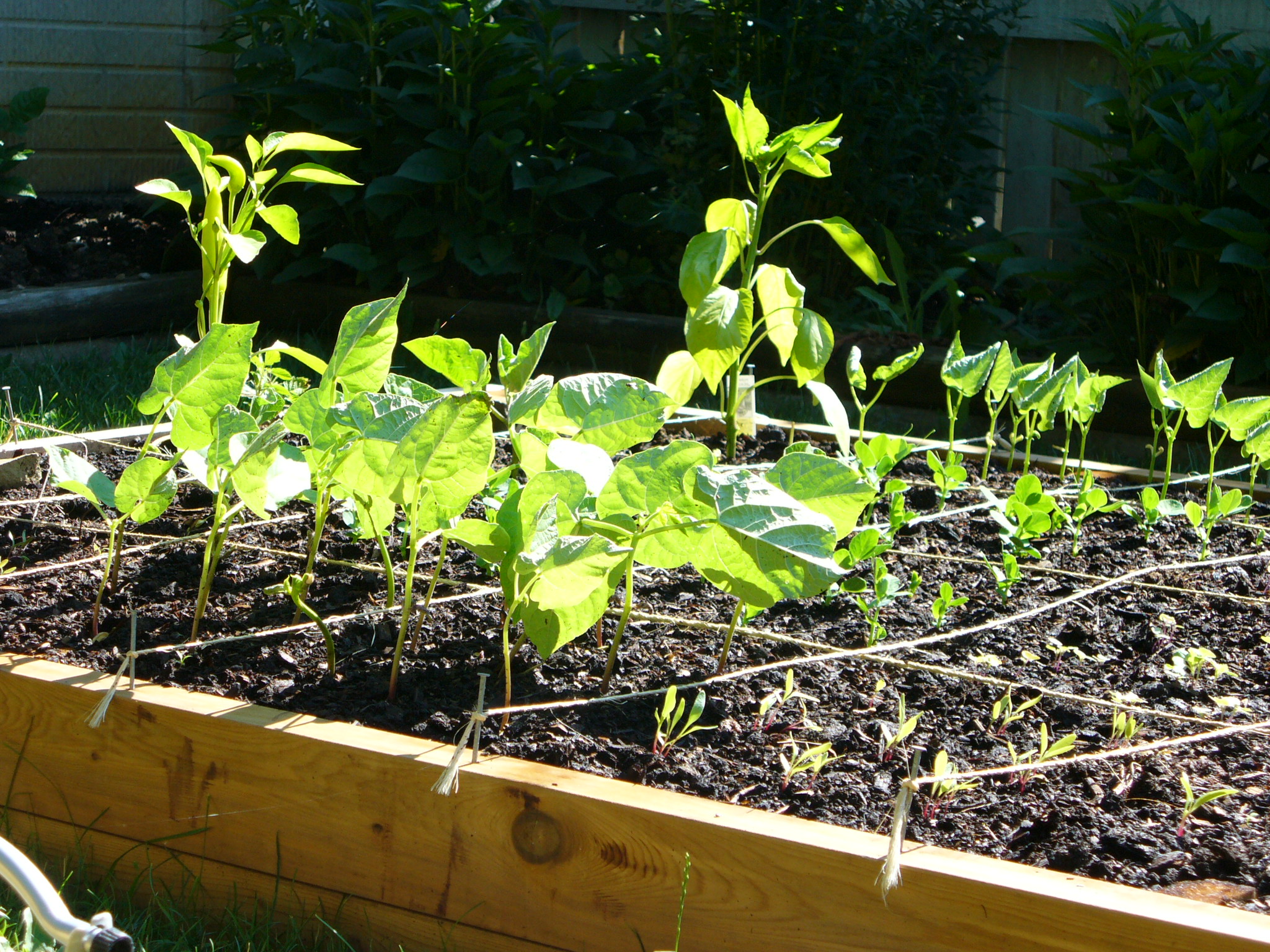
Having recently spent time getting my own small vegetable garden prepared for planting I was reminded of the work that went on across the nation as Americans got back to the land and grew Victory Gardens during World War II.

Victory Gardens were a pivotal way to make a personal sacrifice of time and effort on the WWII home front. Not that growing your own food was much of a novelty at that time. Many people still filled their produce needs by growing their own as agrarian America had done for centuries.

Veggie tales

According to the Victory Garden Manual published in 1943 and written by James H. Burdett, “War, food rationing, and the Victory Garden campaign have given millions of Americans a new appreciation of vegetables.

“… when our appetites were stimulated and our cooks trained, we were summoned as a patriotic duty to grow our own Victory Gardens so as to release commercial crops and canned goods for war demands [to feed the troops].”

The book goes on to say that, “War gave dramatic emphasis to vegetable gardening, but it is an art which is as important in peace as in war. The need for abundant supplies of garden-fresh vegetables in every home is far from ended by a peace treaty.”

“Those who enjoy the making of Victory Gardens should resolve never to abandon a practice which gives so much of exercise, recreation, and good health to all who follow it.”

Productive produce

About 20 million Victory Gardens were planted in the United States during the war. Folks in the country and those in the city turned their yards into large vegetable patches capable of feeding a whole family for most of the year if stored properly. Victory Gardeners effectively produced 9 million tons of vegetables.

For many young adults during the war the habit of growing a large, “Victory-style” garden never left them. My grandparents, for the rest of their lives, continued to grow a massive vegetable and berry garden that took up nearly half of their large yard. I have great memories of visiting the red raspberry vines and eating my fill. My first experience of harvesting potatoes was with my grandma in the garden as I helped her fish them up from the depths of the soil, like buried treasure.

Historical trends swirl around and pop up in the present every now and then and growing one’s own produce is about as good a trend as I’ve seen in a long time. Many people are growing their own because it cuts down costs and enables a more bountiful table during a crummy economy, others are influenced by the philosophies of environmental causes, and some believe that homegrown is healthier because it is generally treated with fewer chemicals.

Me, I just like reliving history and knowing that if I had to grow my own produce, I could. That said; I still have a long way to go to achieve a true Victory Garden!