Skimming is not just for milk…

So far I’ve learned that Athens had a Navy, a rather glorious one, and that in order to work this miracle the Athenians had to turn themselves into a democratic state. This all took place from about 483 to 322 B.C. on the Peloponnesus (information courtesy of the back cover blurb and index of Lords of the Sea: The Epic Story of the Athenian Navy and the Birth of Democracy by John R. Hale).

On a trip to Costco today I spotted this volume by Hale and it now has the honor of residing on my reading pile. It was a tough decision, but the Athenian Navy won out over other front-runners like Teddy Roosevelt as Conservationist, the Mayflower, and a history of the Battle of Trafalgar. I am already endowed with or have access to books covering the Napoleonic naval wars, the landing of the Mayflower, and several biographies of Theodore R.

I would like to give a full-scale critique of my purchase, but I haven’t read it. However, I have employed my trusty skimming skills, my old allies since discovering a book on speed-reading in high school. I figured that was the only way I could make it through my U.S. Advanced Placement History textbook and ace the test (I did and I did).
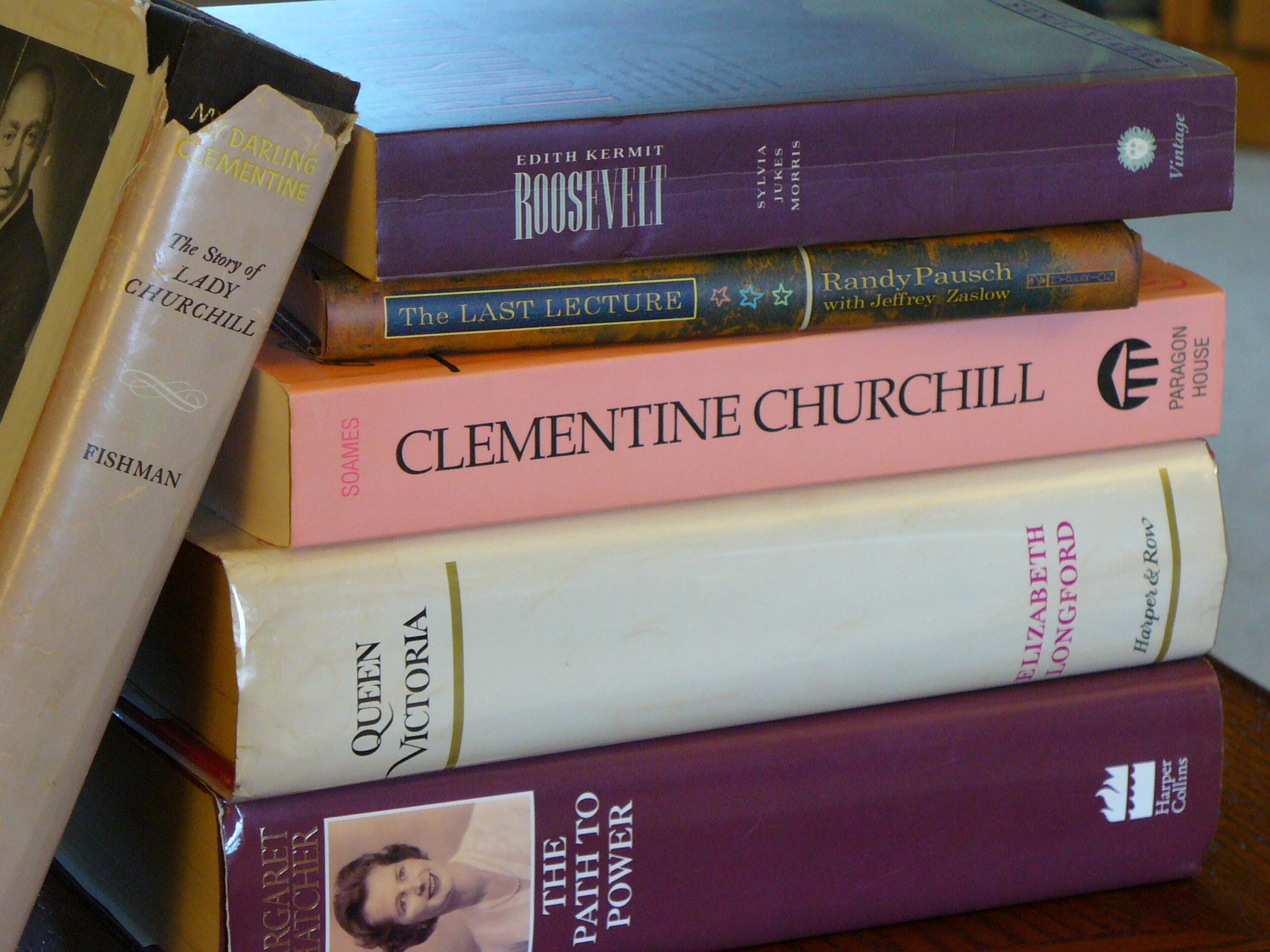
Read a little, learn a lot

I love the subtlety of skimming (it’s  sort of like literary espionage). With  one glance at the cover I know title  and author. The back cover or inside  jacket flaps give me a summary of  what the book is about as well as  reviews. A word on reviews, they are  either insightful or worthless –  depends on the author, so don’t  always take their word for it.

Next I march on to the index, which tells me how the author organized his research and thoughts on the subject. I flip through the book and see what visuals it has to offer. Visuals aren’t important for everyone, but if I am going to take the time to read the whole text on Greek history and Athenian democracy I would like to hope that a handy reference map has been provided.

Finally, I get to the words, the prose. I read a few paragraphs of the introduction in search of a thesis or specific purpose statement as well as perceived bias. Then I trudge through, sampling a paragraph here and there for style and content. If the writing is really tedious, and I don’t have to know the subject matter – I don’t want to read it. Lastly, I read the final few paragraphs in order to know if I want to spend those precious hours working word by word through the entire book.

All this takes about 3-5 minutes and by then I have made my decision to purchase. Not only that, I have now a framework for all the material I will glean from reading the book. This is a valuable memory and comprehension tool.

Try this technique on your next read and see how it works for you!
The Internet: Research Tool

In my college days the Internet as a research tool had the reputation of a con artist heading up a charity. Academia didn’t like the idea of all that unsubstantiated “chatter” out there.

Well, times are changing and a little over a decade has given the Internet a sheen of respectability. It’s still a jungle of information but not a dead loss.

The Internet is a useful tour guide. With regard to history, Wikipedia and the like are a good starting point if you want basic information and are prepared to swim through a river of bias to get it. Encyclopedic sites that are reader-written have obvious problems – anybody can say anything!

Start there and move on to verifiable sources: books, official journals, news items (although, depending on source and with the political bias of many news sources, take them with a grain of salt), and official websites. Some of these are available on the Internet. And then there are story verifying watchdog sites (like Snopes) that come in handy.

Find the Facts

“Verify, verify, verify” is the catch phrase of Internet research. So much information, often self-published, is circulating that you have to consider it questionable until you have two or three sources to back it up.

If I’m trying to recall an historical event and it’s just barely escaping me, search engines can take the details I do remember and lead me back to the source. That is the beauty of the being online.

I’d like to say a word for online bookstores, like Amazon, and their review pages. Thrown in with the occasional crank are useful bits of information that may lead to another book or source of study.

Research on the Internet is still much like putting together a jigsaw puzzle with part of the information here, another fact there, mixed in with a lot of repetition, or on the downside, a bunch of lies.

Tread the river of information carefully, and be grateful we have the freedom to produce it!

Learning from the Past: School Books

“Here, Kitty; see what I have. Oh yes; she sees me now. I have an apple for you, Kit. One for you, and one for me. Kitty is my horse. She will eat grass and apples.”

So goes a reading lesson from page 15 of Classics for Children: A First Reader by J.H. Stickney published by Ginn & Company, Boston, USA, 1893.

I doubt you would find similar subject matter in an early grade English book today. I also doubt many kids know much about horses anymore. Back then, nearly everybody had a horse for transportation and farm work.

I find it interesting that the assumed common knowledge of 1893 differs so much from what we find common today. Digital technology has replaced mechanical technology in most realms of our life, at least on the surface.

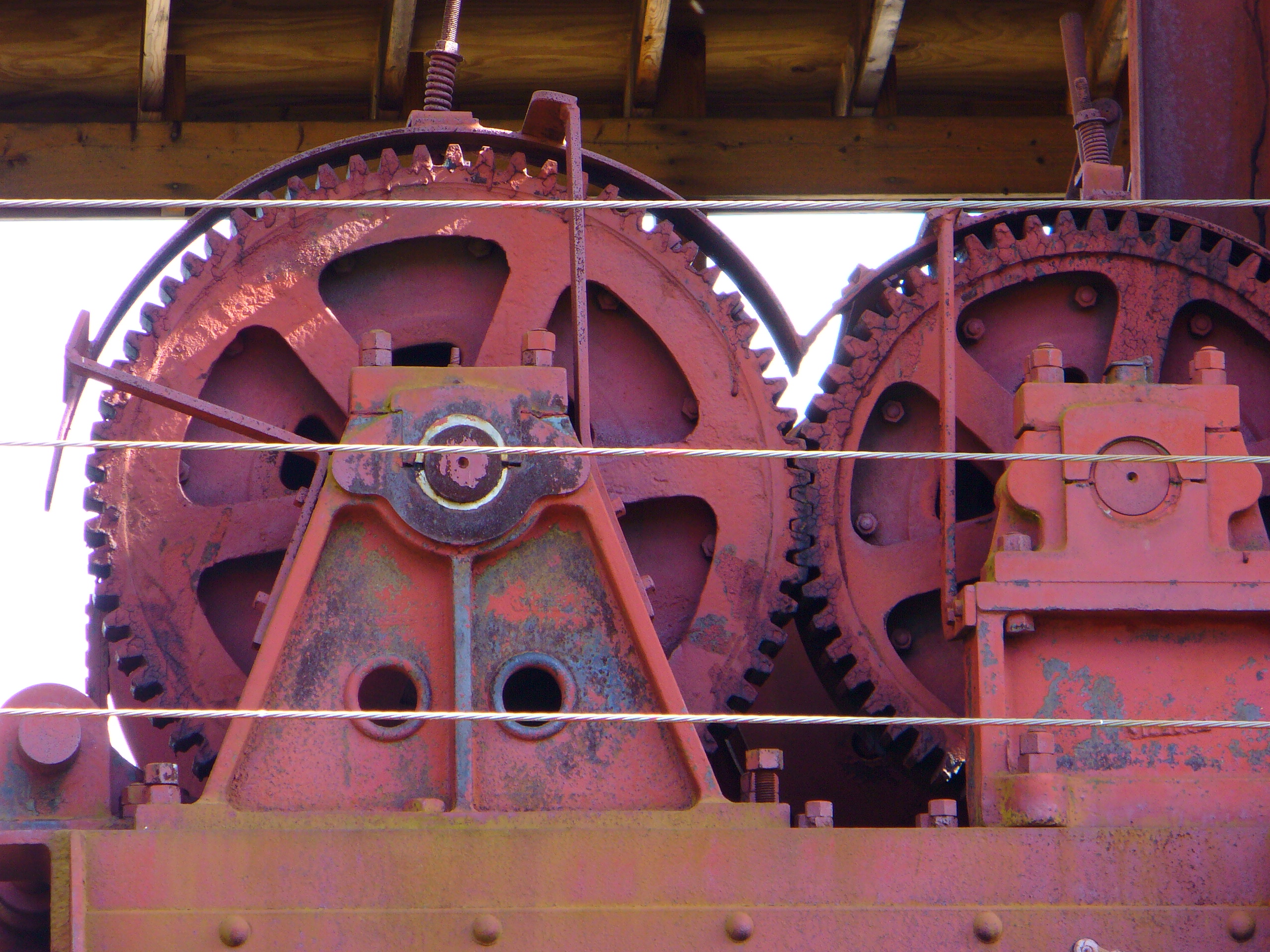
If you scratch down deep enough you’ll find that we still rely on mechanical technology the bulk of the time. Until someone invents the replicator of Star Trek fame, we’re going to be planting seeds in the ground and harvesting them for a long time to come. Mechanical muscle gets the heavy work done.

I before E-mail

Flipping through an antique English primer is a fascinating journey into the past. The rest of Stickney’s reader is filled with references to farm animals, the agricultural world, the natural world, physical chores, and old-fashioned games like rolling a hoop.

I can still remember this world from family stories because my maternal grandparents lived it until they died and my parents grew up in it, but I wonder whether youngsters in their twenties and under will understand these basic things if the digital world continues to grow on its current scope and scale.

An old adage of history, and life, is that you have to walk before you run. You need a solid grounding in the fundamentals before you can move on to the complexities.

Learn a little bit about the agricultural world that preceded and still sustains our digital world.

It’s important.

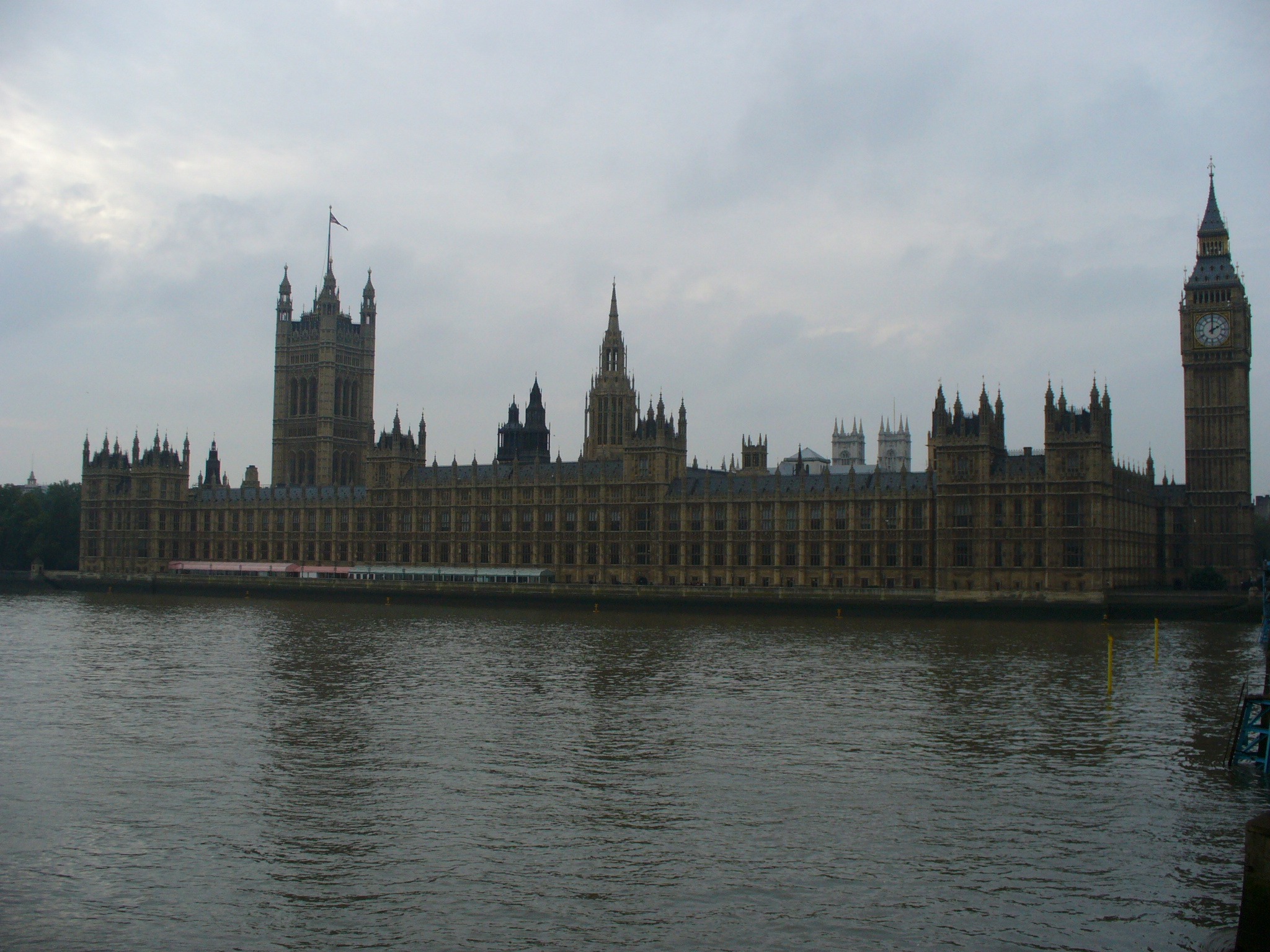
UK Election, Hung Parliaments, and History

Watching the electoral machinations of another country carries the detached, but comforting sentiment that, “ah well, they do have their problems, don’t they!”

It makes us feel better about things back home – almost. Knowing that leadership around the world seems to be faltering on a variety of levels isn’t really comforting, but it is a distraction.

This most recent election in Great Britain has been interesting to me, for its import on a national level in the UK, but also because of the situation it created, a hung parliament.

Three-for-all

Being an American, I’m still trying to wrap my head around the British Parliament and it’s associated traditions and functions. A multi-party system has its share of challenges and this most recent election proves the point.

Three parties took the lion’s share of the general election: the Labour party (of seated Prime Minster Gordon Brown), the Conservative party, and the Liberal- Democrat party. By vote the Conservatives won the most, but in order to create a cabinet and functioning government, a more significant surplus of votes was required for an outright Conservative win. Labour came in second, and the Liberal-Democrats third, with a much smaller percentage.

This is where it gets tricky because, suddenly, the power play is in the hands of the third party – though small, it is the deal breaker. A coalition must be formed by the first two in line or no one has the momentum to rule. Thus, the third party becomes the bride and the first two her ardent suitors.

In this case the leader of the Liberal-Democrats, Nick Clegg, decided on a coalition government under the Conservatives (ironic, as these two parties tend not to be ideologically closely related) and their leader, David Cameron. Using the analogy of American politics, this is like a Republican president peopling his cabinet, attorneys general, and other administration posts with Democrats as well as members of his own party and adding into the goals of his administration, those of his opponents. Thus, you see the complications.

Once the hashing out has been done, Queen Elizabeth invites the prime ministerial candidate with the best odds of creating a coalition government to her presence and asks him to form a government (or as we would style it, an administration). This makes it official. It is the pomp part of the equation that is at once quaint and foreign to those of us from the States.

As a result the new Prime Minister is David Cameron.

Where’s the history?

That’s just it; this is history. The last hung parliament was in the middle 1970’s, it doesn’t happen often, but when it does, it makes for a lot of drama.

“Present-vision,” which is the inability to recognize an historical moment while one is in it, affects us all. We don’t realize until someone tells us later that, yes, your freedoms were being rapidly erased by a government with starkly different views on social structures. Or that, yep, that war in the 1940’s was a big deal!

Worse than present-vision is historical illiteracy. When people can’t look at the past, get the facts, and believe what happened happened, then they, by default, ask for a repeat performance. A few charmers from my college days, “That Soviet Union thing, well, it didn’t work out so well, especially if you disagreed with anybody in power,” and “No, the United States did not know they were going to win the Second World War when they entered the fray, that’s why they had to fight a war!”

Live in the present, but learn from the past, and look to the future!

Do you remember when…?

The details of the past are accessible by a single question. Being an historian only takes that one question and someone with a story to tell.

There are so many assumptions about history – primarily that it is inaccessible and boring. It really isn’t. It just takes someone young asking an elder what they know about the past.

History passed down in this way is referred to as an oral record. Often, people who yearn to research their personal genealogy become the default guardians of this historical record in their family. They were the ones who cared enough to find out about the family history before the bearers of that record were no more.

Sometimes we assume that once we’re tagged as the “family historian” we’re expected to write a book, which is a great achievement, but simply being able and willing to one day share those same stories with a younger generation is a great achievement, too.

Be the link – learn the history – pass it on.

Time Machines…

At a garage sale I picked up a book entitled, A Lady’s Life in the Rocky Mountains by Isabella Bird, who, according to the cover blurb was “a Victorian Englishwoman” – an intrepid lady traveler of the late nineteenth century.

These journalized or epistolary (letter based) accounts of the past, primary sources, are a fun way to study history. Their first-person perspective is always a refreshing change from most analytical histories on the bookstore shelf. Such perspectives, untainted by revision or assumptions are the actual thoughts of those who lived the past, warts and all.

Good intentions

I like this genre so much that I have two other books of this type in my reading pile. Mollie: The Journal of Mollie Dorsey Sanford by the aforementioned Mollie Dorsey Sanford and Daughter of the Regiment: Memoirs of a Childhood in the Frontier Army, 1878-1898 by Mary Leefe Laurence. Neither of which I have finished. For, unlike fiction, journals have their boring days, even historical journals, which tempts me to put them down and reach for something more exciting.

This is a conundrum of historiography (the study of the study of history) – the boring stuff. What do we do with it? Read, skip it, or write about it in painful detail? There are authors who do that!

Acknowledge it. If our lives were daily filled with fast-paced action, danger, and intrigue, we’d be neurotic! The boring stuff lets us live a saner life.

Life is in the details

Maybe boring is too much of a condemnation; call it instead daily life, the details of living. Stopping for a pretty sunset, relaxing in an empty hour with a good book, washing the clothes, fixing a meal, etc. These things go on, even when the danger of wars, upheaval and panic have passed.

I suspect my curiosity will get the best of me and I’ll drift back to Mollie, Mary or Isabella and finish their works. The rich detail of the eras in which they lived adding to a greater knowledge of life in the past.

If you’re stuck for an interesting history read, try an historical journal – your very own guided trip back in time.

What’s in a name?

Here’s an experiment in the obvious: take a map of the world and read the names of countries in any one of the continents… Britain, Germany, France, Spain… China, Japan, Korea… Zimbabwe, Sudan, Nigeria… America, Canada, Mexico…

See how easy it is to roll right over them?

This is what I mean; we are attuned to ignore the obvious (Sherlock Holmes would be proud of this deduction). But every once in a while we turn our head, squint our eyes and suddenly a word we have read or typed hundreds of times looks like a foreign language to us.

Why is that?

I’m an English speaker, and I can cope with French, but I can’t easily read Middle English. Yet many of the words I use on a daily basis are mutants of the English linguistic past – let alone the influence of German, Spanish, Latin, Greek, Gaelic and Hebrew among the many other languages that contribute to modern English.

America, Amerigo, and Ap Meric

Yesterday I picked up a book that I had read a few years ago, The True Story of How America Got Its Name by Rodney Broome. It’s an interesting volume and as I skimmed it, I got to thinking about the many variations of the origin of “America,” as an appellation for the continent.

Nearly everyone has heard of Amerigo Vespucci, and how a friendly mapmaker gifted his first name to the continent. Well, maybe – but why use a first name, usually reserved for royals, when surnames were the norm for everyone else?

So Broome supposes that maybe it wasn’t Vespucci’s first name, but someone else’s last name on the map. Interestingly, Vespucci was on board a Spanish ship with an aggressive captain who readily attacked English vessels. At the same time an English vessel disappeared, carrying the famous explorer John Cabot in whose possession was a map illustrating the American continent and inscribed with the name of Richard Amerike (or Ap Meric, as it is in Welsh).

Call in NCIS, this has the makings of a mystery! Did the map change hands? Was Amerike’s surname on the map first? Could be.

America, by any other name…

If you search far enough there are a number of other origins for the name “America” that pop up.

Some claim that the Scandinavian Norsemen who came exploring the American continent in pre-Colombian times brought with them a phrase for this new western land, “Ommerike” that sounds roughly like America.

Other possibilities suggest the Mayans had a similar sounding phrase for their lands.

So what’s the truth?

Names that sound similar and move from one language to another can become mixed and “owned” by both cultures. Imagine the interesting spelling variations you can get from an answering machine if the caller’s voice isn’t clear!

In my opinion there is validity to the connection to Richard Ap Meric. As Broome contends, maps were precious at that time in history, particularly in areas previously unexplored by Europeans. If Mr. Vespucci got a hold of it, why wouldn’t he want to cash in on a similar sounding name? After all, exploring the new world was all about finding gold, glory and gathering fame back home!

The possibilities have merit… or is that Meric?

Every little piece of history…

I think there is a misconception about history. That you have to slog through a massive tome on the more esoteric details of Early Modern Germany, or whatever, in order to really grasp history.

If you get a kick out of Early Modern Germany, then great, enjoy, and there are some of us who do. However, in order to develop a working knowledge of history you really just need a good, solid curiosity and a few resources.

I personally will slog through the heavy volumes from time to time, but I also like a good documentary. Usually the fare of PBS, the BBC, and the History Channel, documentaries are a great framework from which to build a knowledge of history.

Why documentaries?

I like them especially for a couple of reasons. First, they are visual and visual people need to see something. Drawing word pictures in your mind from a book is fine, but to understand an historical event it helps if you can take a gander at the actual surroundings where it took place.

Secondly, a good documentary can help you overview a topic because no matter how detailed or specific the subject is, producers assume the audience will initially know nothing about whatever it is they are covering. Say you are doing a show on Hitler’s advance into Russia – most people know something about WWII, but generally the writers and producers will give a short overview of the war at the start.

This is like Cliffs Notes for history novices – a quick review or introduction that helps you wrap your mind around the topic and secure the details in the chronology of history.

Thirdly, a great presenter can make history come alive.

Docu-nots

Okay, now for the downside – documentaries will have a bias. You may agree with it, you may not. If you don’t, don’t watch it or watch it with reservations – there may be some interesting facts still to be gleaned.

Finally, just like a great presenter can make a great documentary, a really crummy presenter can bore you to tears – find the good ones, usually by trial and error.

Netflix.com, Hulu.com, and the like make history videos readily available, as do libraries. Search them out and add one to your regular rotation of entertainment.

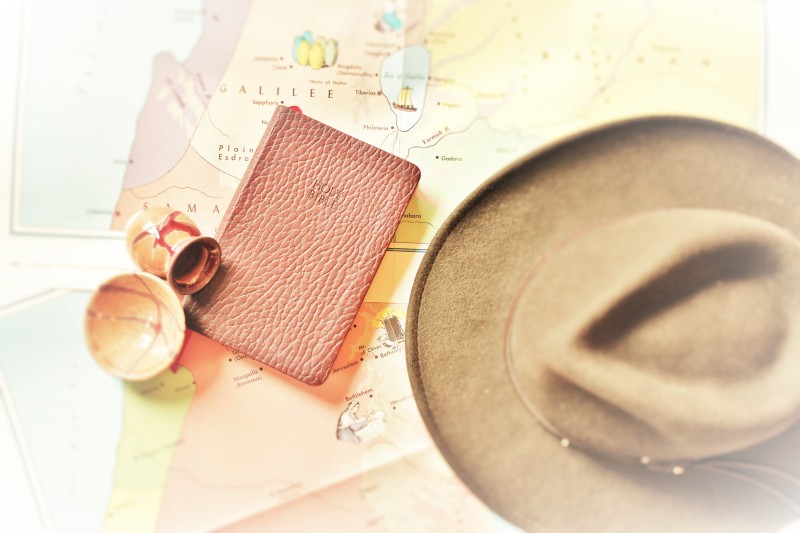
Every little piece of history is one more part of the puzzle. One more fact, event or personality that helps us understand what mankind has done and will do. Put on your Indiana Jones fedora, sling your bull-whip over your shoulder and get exploring!

That takes me back…

History.

We all have a history and so does the world.

History happens every day. Think of it as one long, ongoing museum display – each day new images are created, new events occur, new biographies are lived – and with technology we see more of it, or ignore more of it than ever before.

Strange though it may seem, history is actually cyclical. What happens in the past will affect the future, and what happens in the future will affect how we view the past. Crazy, but true.

Join me on this web log for a journey into the past, the present, and the future. One historical event at a time!