Potholes and Pitfalls: The Bumpy Roads of History

“That’s how history works. The mundane things often times become the measure of a civilization.”

AFTER A month of tooth-jarring journeys over the pothole infested roads of north eastern Ohio, I’ve decided that there must be a lesson of history here. Surprisingly, there is one and not very far off.

Roads are, for the U.S. and much of the developed world, a thing to be taken for granted as they are so ubiquitous, but not always was it so. Smooth, or relatively smooth, asphalt and concrete rivers of traffic flowing across the face of the land are a product of the past century. Before that waterways, railways, and dirt tracks were the cross-continental lanes of locomotion.

What does it mean to us when road begin to degrade? Is it just an annoyance – or are there deeper implications?

Unrepaired and unmaintained roads, like wounds, begin to fester. Traffic slows, the spread of goods slows, more repairs on trucks – the price of milk at your grocery store goes up. But ultimately, it is indicative of the state of finance and stable government of any given nation. Maintenance is a strong indicator that a nation is functioning well, while disrepair suggests that dissipation, internal problems, and debt are pulling the focus away from these boring, but vital details. When Rome was falling, its roads descended into disrepair and then disuse.

THAT’S HOW history works. The mundane things often times become the measure of a civilization. Will it continue in good health or collapse in the shadow of a coming power with more nefarious and darker motivations? How many times has history repeated this scenario?

Never forget that though we may study the past – we live in history right now!

Keeping thinking history!

– Amanda Stiver

A Wish for the 4th

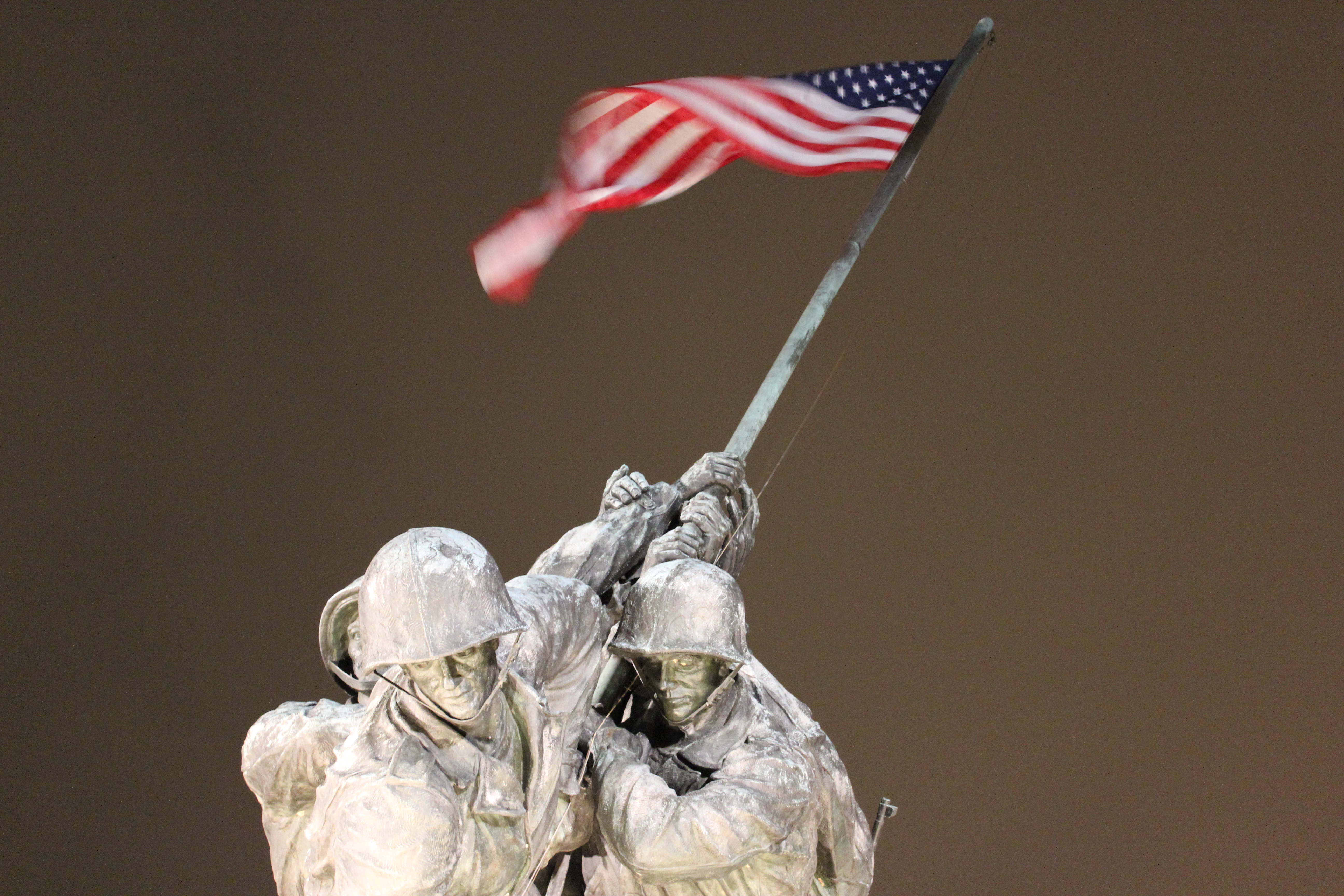
american flag on iwo jima statue

Image: Amanda Stiver

Here’s to the 4th!

Living in the United States is a unique experience at this time in history. Daily I enjoy the bounty procured by generations, but as my nation moves away from the basic tenets of law, justice, and the duties and piety of citizenship, the future may hold unpleasant surprises. I say, savor freedom while it is ours.

As a child, the 4th of July was on my radar because of the cookouts, the fireworks, the firecrackers, and the patriotic music, but as I grow older, the meaning of the day supersedes the accoutrements.

The price

Our Declaration of Independence includes these words, “…Prudence, indeed, will dictate that governments long established should not be changed for light and transient causes…” Yet we live in an era, a half-century or so, of changing governments around the world. Some changes justified, others simply to satisfy the whims of a slim minority.

When the men who signed their defiance to the crown with the words, “And for the support of this Declaration, with a firm reliance on the protection of Divine Providence [God, in our modern parlance], we mutually pledge to each other our Lives, our Fortunes, and our sacred Honor,” they put their lives on the line. How many of us use such words anymore? Is it perhaps because our causes are not sacred, nor honorable?

John Adams, firebrand political figure, described his feelings about the Battle of Bunker Hill (a loss, but a gain in courage for the American forces) in a letter to his wife, Abigail, “The race is not to the swift, nor the battle to the strong, but the God of Israel is he that giveth strength and power unto his people. Trust in him at all times, ye people pour out your hearts before him. God is a refuge for us. –Charlstown is laid in ashes.” Whatever your creed, these are the words of a man who didn’t put all his faith in his own powers of brilliance or strength of arm. Self-reliance is noble, but all human selves eventually fail.

The Light and Glory

Adams projected a future beyond himself when he described what he foresaw as the festivities of the future Independence Day in America, “I am apt to believe that it will be celebrated, by succeeding Generations, as the great anniversary Festival… You will think me transported with Enthusiasm but I am not. –I am well aware of the Toil and Blood and Treasure, that it will cost Us to maintain this Declaration, and support and defend these States. –Yet through all the Gloom I can see the Rays of ravishing Light and Glory. I can see that the End is more than worth all the Means.”

May this Independence Day remind us that freedom is a gift of God and that liberty is bought at a price.

And may you, in whatever nation you live, know and accept the responsibility that what you do now, what ideas you support, and causes you uphold, will be paid for by the generations that come after us. For better or worse.

Keep thinking history! Keep thinking ahead!

– Amanda Stiver

Olympic Shooting Sports: Finally, A Positive Example

I like the Olympics. They are full of history. Mostly ancient Greek history, but also Celtic history. Many of our modern day track and field sports were well known at Celtic feis (arts and sports festivals). The shot-put, the hammer throw, and foot races, among others.

The Celtic hammer throw (Dublin Irish Festival 2012). (Image: Amanda Stiver)

But what I really like about this year’s games, especially in light of the tragic shootings in the past several years, is the positive image of the firearms and archery sports.

I’m pleased to see firearms used rightly, for constructive competition that celebrates eye-hand coordination and intense focus. Weapons are useless and inert without someone who decides to use them. I like that there are high-profile, skilled, focused, and honorable men and women who compete and show that using a gun or a bow is not inherently evil.

How a gun is used is the key. What you choose to do with it once you pick it up.

Positive reasons

Which leads me to the Cheyenne River in South Dakota. It’s our family locus. We go back there to visit and we compete in familial target competitions. We use our firearms carefully, specifically, and with great regard for safety. Many of my family also hunt for meat during the deer season. We are at home with rifle and shotgun. We take great joy in using them rightly.

(Image: Amanda Stiver)

We have a family tradition that goes back generations using not just guns, but also bow and arrow. It’s part of my family history.

The issue

Which is why it makes me sad and angry that people wantonly destroy human lives in tragedies like we have seen in Norway, Arizona, Colorado, and now Wisconsin. But frankly, it makes me mad that people murder at all, with or without weapons!

And that brings me back to the summer games. I’m proud to see athletes choose to use firearms and bows rightly, and in a safe, positive way.

Just as in every aspect of history, the choice is always down to us. We can choose to perpetuate bad historical precedents of violence and hate or we can choose to stand up for a moral code that values human life and positive traditions.

– Amanda Stiver

The Boundaries of History: Mountains

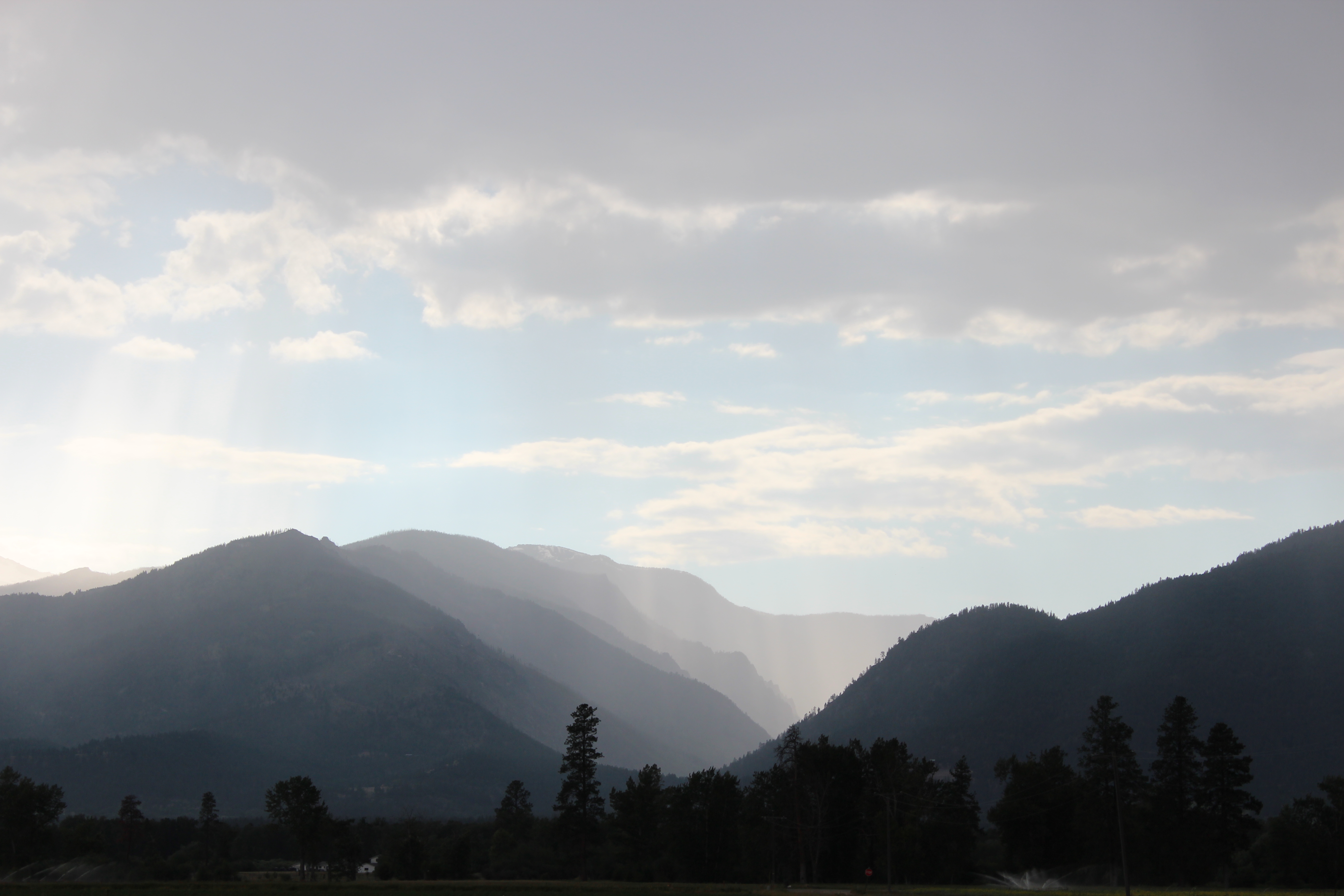
(Image: Amanda Stiver)

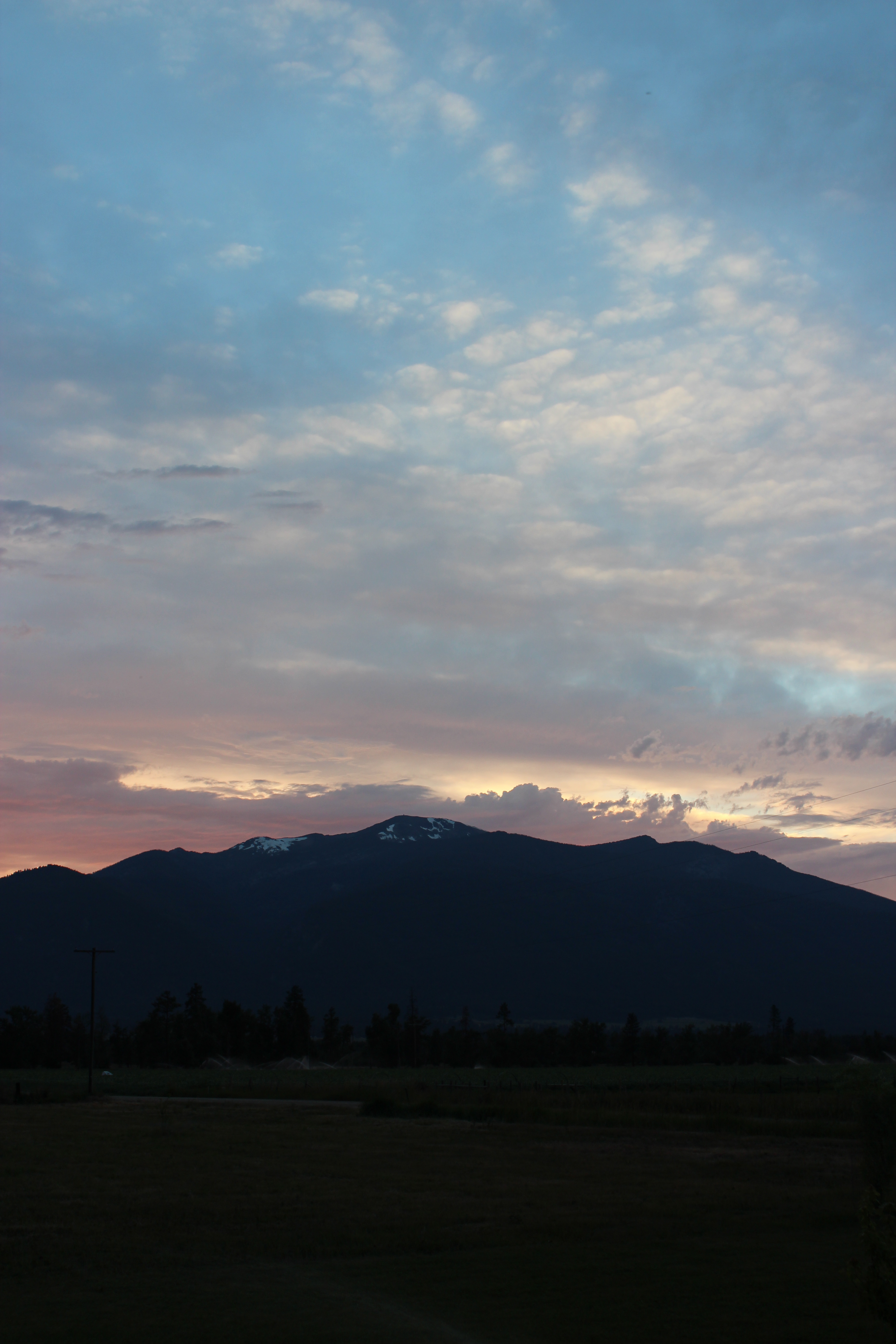
I’m watching a storm break over the Bitterroot Mountains. It’s a spectacular show of grays, blues, greens, and a touch of white off and on. Almost as spectacular as the sunset I watched over the same mountains a few days later. I live in the Midwest in a house among grove of trees and I rarely get to see a solid sunset, just a tint now and then, so watching the mountain version on my visit to Montana was worth the wait.

Mountains. What can I say about them? They are solid, craggy, and looming. They get in the way, they make people go around them and occasionally, they spew lava and pyroclastic muck.

They also make history. For without mountains, the conflicts, borders, traditions, and cultures of our human history would be something completely different. If it were plains all the way around, history would probably look like a glorified game on a chessboard.

(Image: Amanda Stiver)

Kings and their armies would charge across and gain a few miles, and then the opponent would charge over and take them back. Like an endless replay of the trenches of World War One. It takes a lot of manpower and materiel to gain and hold an indefensible flat space. It’s harder to take a mountain fortress, but easier to hold it.

Mountains have shaped us. Mountains and rivers and plains and valleys and oceans. They still shape us.

“And He has made from one blood every nation of men to dwell on all the face of the earth, and has determined their preappointed times and the boundaries of their dwellings,…”

Food for thought.

Keep thinking history.

– Amanda Stiver

Wall Drug: An American Experience

I’m back in one of those tourist haunts that helps define the geography of my life. That sounds a lot more romantic than it is. I’m in Wall, South Dakota, at Wall Drug, a strip of western themed tourist trap that is a true tribute to the effectiveness of billboard advertising.

(Image: Amanda Stiver)

When Ted Hustead and his wife moved to the town of Wall to operate their drugstore back in the 1930’s, they latched onto the idea of using billboards to advertise their wares to weary and thirsty passing tourists. If you have ever taken Interstate 90 across the state of South Dakota, you know what I’m talking about. You can establish your relative location in the state by the sheer number of “Wall Drug” billboards that stack up in herds along the freeway.

Selling the goods

The funny thing about it is that it actually works. After 1,200 miles of seeing Wall Drug signs, people become, quite naturally, curious. Even people like me who have driven these roads to see family so many times I can watch the scenery (or sometimes lack thereof) pass through my visual memory with my eyes closed. Familiarly provides no immunity to the lure of Wall.

(Image: Amanda Stiver)

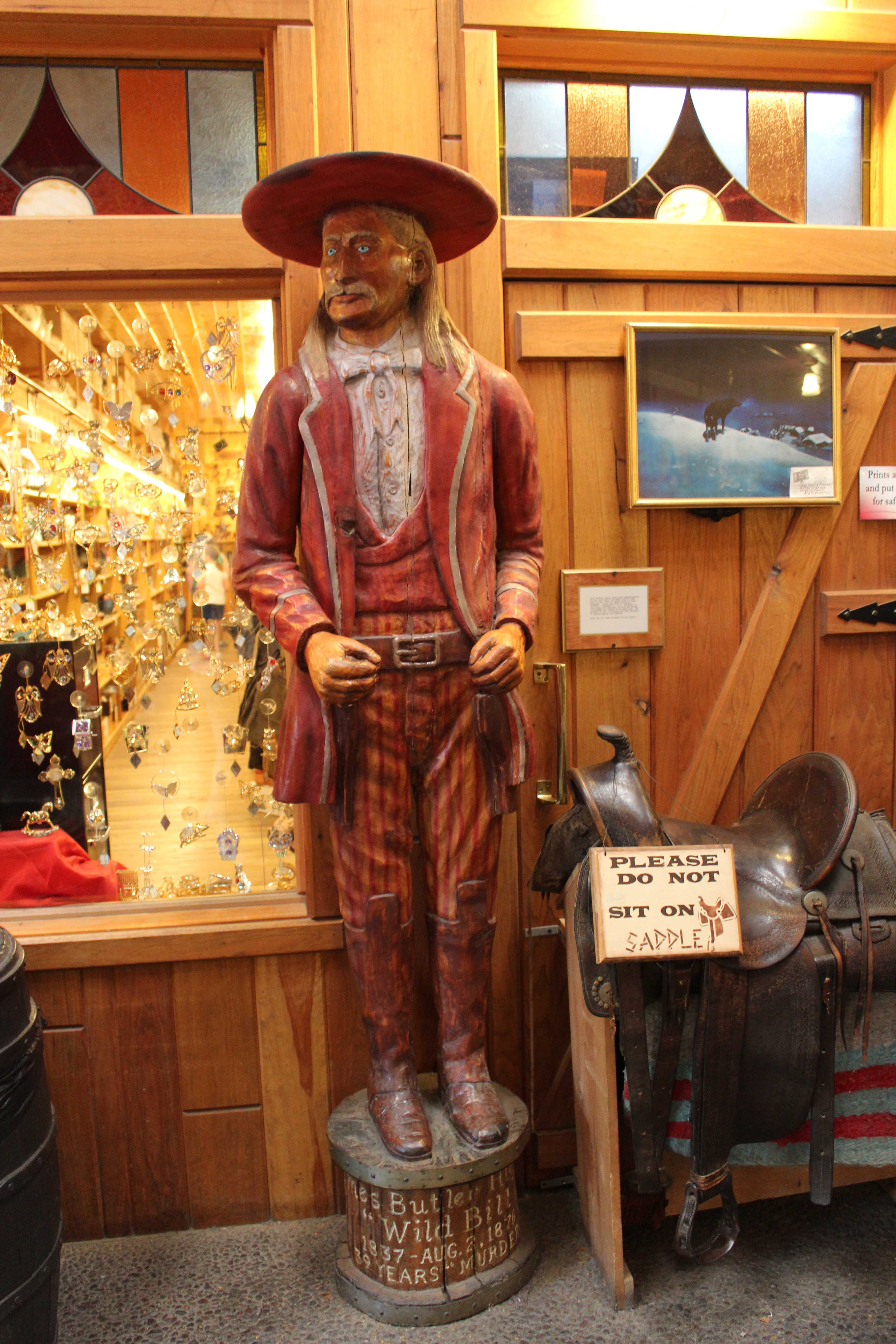
I think this is because Wall Drug, despite all the tourist adverts and schtick, provides things that tourists naturally crave – restrooms and cold liquids and ice cream. That and a nice bookstore and some quality western art. It also provides the myth of the west, with wooden cowboys and gamblers lurking in the halls of the indoor street. The complex has grown over the years, but the core is comfortingly familiar.

My last visit was 15 years ago, and by and large it remains the same. Families roaming the halls, ice cream in one hand, camera in the other. People taking a pit stop before continuing on to Mt. Rushmore or the Badlands. Just as I did on my visit years ago I bought a book, a definite step up from my initial visit when I was small and craved such sundries as cute little dolls dressed as western characters.

Questions raised

There is something plaintive, too, about a place like Wall. It raises questions: How long will tourism last in a tough economy? How long will we even recognize the quaintness of such a place? What does the future hold for a country whose younger generations know only a caricature of the history of the American West?

(Image: Amanda Stiver)

Maybe part of the answer is in that history of the peoples whose collective experiences made the West great. Where ideals of hard work, faith and justice, side by side with hardship and struggle fill in the spaces of the Western Myth of gamblers, claim jumpers, and outlaws.

If you’re in South Dakota and need a cool drink on your parched journey, stop at Wall and contemplate these questions and maybe you’ll be the one to find the answer.

– Amanda Stiver

Invigorate Your History (And Your Family’s) Life!

Following on the heels of my historical consideration of Thanksgiving I’m back tracking to the topic of how to make history a part of daily family life (“I Beg of You… Don’t Hate History”– continued).

(Image: Amanda Stiver)

For those with a pre-existing love of history, this isn’t a problem, people like us discuss history all the time; family history, world history, military history, ancient history, etc.,… we have endless arguments about fairly trivial points of history. We (animatedly) discuss the number of soldiers under the command of a centurion in Ancient Rome – 100 or 60? (60 to 80 actually, opposed to the commonly assumed 100.) We argue about the way people dressed or the historically inaccurate firearms used in movies… and on… and on.

But what about the way people lived a mere two or three generations ago, how do you make that live?

(Image: Amanda Stiver)

I’ll cut to the chase… If you want to learn domestic history for the past 70 to 80 years you can read a few good books on various subjects, or a few dry textbooks that cover all of it… or… you can get a subscription to Reminisce magazine, Looking Back, Good Old Days or one of the other nostalgia periodicals and read compelling, quaint, realistic, snippets of life from the turn of the century to the present day.

I’m not shilling any of these publications I simply like them. They remind me of the stories my parents and grandparents told me about life in past decades. Reading about these people is far from the skewed social messages of neo-socialist-Marxist education materials, you get a sense of how real, ordinary people lived… and they have pictures!

The fundamental commonality of the stories in these publications is usually expressed in this way, “We were so poor, but we really didn’t know it, we had food from the farm, a home, and a loving family.” People worked hard and enjoyed the little they had. They had a sense of hard work, and hope for the future. They were individuals, but they had compassion for their fellow man and a duty to their community that can’t be legislated by a government.

(Image: Amanda Stiver)

I can’t recommend these resources enough. Some of the above publishers also produce compilations of articles based on various subjects, for example the Great Depression. They include photographs and short article stories that are a great read to share with young ones (did I mention the pictures?). Getting them interested in these very human stories is an effective gateway to a lifelong love of history. True history.

– Amanda Stiver

Thankful

Turkey Day, Gratitude Day, Thanksgiving Day – whatever the variation this one day is life or death for a nation, for America.

If we are not thankful, we are entitled and entitlement is the death of a nation. Taking Ancient Rome (among others) as an example, when an empire falls, you can bet that a lack of thankfulness for the freedoms (in America’s case) and advantages (in the case of other empires) is the attitude shift that leads to apathy, degradation, dependency, and finally, destruction.

Every year Thanksgiving comes around and we either look forward to it, or it simply gets lost in the marketing juggernaut of popular holidays from Halloween to New Year’s Day. A true sense of Thanksgiving gets swamped in the onslaught, and that’s sad because a holiday focusing on gratitude and not getting is rare these days.

Gratitude enables us to recognize that we are blessed, that we have something to be thankful for, that we have something to work for in order to be thankful for it. It is the antidote to entitlement, apathy, and self-centeredness.

So, with every bite of turkey you eat, don’t go without remembering and thanking the One who made it possible for all that is there to be thankful for; for life, for freedoms, for peaceful gatherings, for food itself… and much, much more.

– Amanda Stiver

I Beg of You… Don’t Hate History

Let the following numbers sink in and then I’ll explain why they’re horrifying…

(Image: Morguefile.com)

— A mere 20% of American fourth-graders (~10-11 years old) passed a National Assessment of Educational Progress U.S. history test with a “proficient” knowledge of their country’s history.

— Only 17% of eighth-graders (~14-15 years old) tested proficient.

— Worst of all, twelfth-graders, seniors in high school ready to go to college and become registered voters at 18 years old, scored a horrendous 12% proficiency (Stephanie Banchero, “Students Stumble Again on the Basics of History,” Online.WSJ.com, June 15, 2011).

I cannot number the times I’ve heard the now familiar statement, “Well, I hated history when I was a kid, but now I’m that I’m older, I’d really like to learn about it.” Followed by, “It’s probably because I didn’t have very good history teachers in school.”

I can’t fix the latter, which is the quagmire of our educational system dictated by politics. I can address the former; indeed I feel I must, so dangerous is this crisis.

I have but one life to give…

(Image: Morguefile.com)

Theoretically, 88% of American seniors know next to nothing about the country that gave birth to them, prospered their parents, allows their freedoms of dissent, and finally freedom to vote (or not to vote, as they wish).

88 per cent devoid of basic U.S. history knowledge! This is abysmal!

To me, as a historian, it is tragic because I love history, and my knowledge of the past lets me see into the future. Yet more fundamentally, I am appalled that our nation knows so little of its glorious, storied, sometimes dark, but often bright history.

It is tragic, too, because history is the fulcrum upon which our freedoms balance. Educationally speaking, math, science, and written word studies give us the means to improve our lot and style of life, but history hovers above, around, and beyond all that. History was passed on by word of mouth long before it was written down; it pre-existed and sustained those other disciplines. You can’t learn math if it is illegal for you to do so. History teaches us what is legal and what is not.

Most importantly, however, history preserves our knowledge of what freedom is. Without that, any dictator can come in and trounce us into submission. Without understanding the history of their struggle for freedom, any people can and will become the servant rather than the master. They no longer value what generations before fought and died to give them. They no longer value the representative government, the checks and balances, the useful traditions that give us identity, freedom of expression, freedom to meet together in peace, and freedom to transact government of the people, by the people, and for the people.
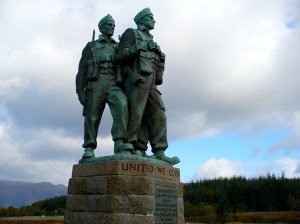
(Image: Amanda Stiver)

The Scottish Declaration of Arbroath says it this way:

“It is in truth not for glory, nor riches, nor honours that we are fighting, but for freedom—for that alone, which no honest man gives up but with life itself.”

Give me your tired, your poor…

To know history is also to learn compassion for those who suffer because so much of human history is suffering. It is to hear the cries of hungry children during the Great Depression, waiting for food that would not come because no food could be bought because no one had money and no jobs were to be found.

It is to hear the weeping of mothers whose sons died at Lexington and Concord, and at Gettysburg and Antietam. It is to see the fire fall from the sky as American soldiers invaded the coast of Normandy and made bombing runs deep into enemy territory over Germany to defeat the Nazis during World War II.

It is the struggle of pioneer families who made the hard, unrelenting trek across the American West to find a better life, full of greater promise and a more abundant future for their children and generations to come.

Learn to love history…

These low scores are simply one of the signs of a greater malaise in America right now. It will take us some doing to get out from under its apathetic and dreary spell.

(Image: Morguefile.com)

I’m prescriptive by nature, and every problem has a solution. I can’t think of a better way to illustrate how history should be taught, and how to find the stories hidden amongst the dates, battles, and personalities than to recommend the following clip of Andy Griffith teaching a history lesson. It is classic and unparalleled. It is how I see history when I read it – full of life, full of great causes, full of heritage.

http://www.youtube.com/watch?v=aGXCH7zBdc4

In my next post…

I will concentrate on ways to re-invigorate a personal and family love of history with book and magazine recommendations and other ways to make history approachable. Man or woman, parent or child, young or old it is essential to find a way to learn U.S. and World History, and to learn to love it… stay tuned.

– Amanda Stiver
Eating Up World War II

(Image: Morguefile.com)

Could you live on 1 fresh egg every two weeks?

Could you live on 2 oz. of tea every week? How about 4 oz. of meat per week (that’s the size of 1 small steak, by the way), 2 oz. of butter (half a stick), 2 oz. of cheese, and 8 oz. of sugar (yep, just one cup A WEEK!).

These are merely a sample of the ration measurements for a single individual’s food for one week during World War Two in Great Britain. This, combined with the rations of other family members in a household, were the raw ingredients for breakfast and dinner. Lunch was often taken at school or a work cafeteria in order to stretch those portions.

Bread wasn’t rationed and neither were vegetables. To take advantage of fresh produce, many wartime Britons grew stupendous gardens – Victory Gardens. Likewise their American cousins dug in and planted – though rationing in the States was not nearly as severe. Vegetables made up a large part of the diet and were the main supply of vitamins and minerals.

The Ministry of Food was the government office in the UK that directed rationing and also provided creative recipes for using limited foods. Taking a turn through a cookbook from that era is a lesson in thinking outside the box. Replacements and substitutions were the order of the day.

Next up… how and what kind of meals did they create on such meager portions? Stay tuned!

(Ration facts courtesy of Victory Cookbook: Nostalgic Food and Facts From 1940-1954, Marguerite Patten OBE, Chancellor Press, 2002.)

Book Me: Keeping History Real

This scowl could only be saying, “Interpret history for yourself!” (Image: Morguefile.com)

Some days history comes alive and some days it stays comatose. Why is that? Why does one subject or exhibit or picture, etc, spur a curiosity in the past and another makes voluntary dental work sound like fun?

I had one of these moments at an interpretive center the other day. I can’t call it a museum because museums tend to emphasize collections of things as is, without intensive interpretation.

This location wasn’t bad, but there were a lot of ambient battle noise recordings that could have been a couple of decibels lower. That coupled with an audio playback of each written display in tight quarters resulted in a cacophony that made me want to leave rather than immerse myself in history.

On the other hand, it might have been me because I was tired out from a long couple of days of filming, so I wasn’t in a very receptive mood. However, on the road home as I read the short pamphlet about Fort Necessity in southwestern Pennsylvania I really got into the subject. Who knew that a multi-thousand dollar interpretive center would fail to inspire where a 50 plus cent sheet of folded paper with a few paragraphs would?

This is the dichotomy of history and of the use of interpretive centers, which are more and more replacing old style museums.

Is interpreting history wise? Should not each one of us have a chance to examine the facts unimpeded and come to our own conclusions?

What if the bias of the interpretive center is wrong? Are you really teaching history or are you perpetuating an opinion?

Probably both. We must interpret, and any teacher of history, no matter how much they try to avoid it, is interpreting the subject via their own personal bias to their students. That’s part of being human.

Developing a personal curiosity into history can help each of us interpret the facts on our own. If an exhibit fails to enthrall you then dig into some books on the subject. You might find the angle that eluded you and develop a whole new area of interest.

Keep history real!

Amanda Stiver