Eating Up World War II

(Image: Morguefile.com)

Could you live on 1 fresh egg every two weeks?

Could you live on 2 oz. of tea every week? How about 4 oz. of meat per week (that’s the size of 1 small steak, by the way), 2 oz. of butter (half a stick), 2 oz. of cheese, and 8 oz. of sugar (yep, just one cup A WEEK!).

These are merely a sample of the ration measurements for a single individual’s food for one week during World War Two in Great Britain. This, combined with the rations of other family members in a household, were the raw ingredients for breakfast and dinner. Lunch was often taken at school or a work cafeteria in order to stretch those portions.

Bread wasn’t rationed and neither were vegetables. To take advantage of fresh produce, many wartime Britons grew stupendous gardens – Victory Gardens. Likewise their American cousins dug in and planted – though rationing in the States was not nearly as severe. Vegetables made up a large part of the diet and were the main supply of vitamins and minerals.

The Ministry of Food was the government office in the UK that directed rationing and also provided creative recipes for using limited foods. Taking a turn through a cookbook from that era is a lesson in thinking outside the box. Replacements and substitutions were the order of the day.

Next up… how and what kind of meals did they create on such meager portions? Stay tuned!

(Ration facts courtesy of Victory Cookbook: Nostalgic Food and Facts From 1940-1954, Marguerite Patten OBE, Chancellor Press, 2002.)

July the 4th: Illuminating Independence

The flag of the United States adorns a small flower arrangement in my dining room and bits of red, white, and blue are to be seen inside and outside my house. I may even have an illumination or two. But these things are only the outward symbol of 200+ years of American history and the quest for freedom that began when the Second Continental Congress adopted the Declaration of Independence on July 2, 1776.

We celebrate the 4th day of July and not the 2nd, but as you’ll read in the following quote* written by John Adams (yes, him again) to his wife Abigail the vision for an expansive future was there from the earliest days of the Republic:

“But the Day is past. The Second Day of July 1776, will be the most memorable Epocha, in the History of America. — I am apt to believe that it will be celebrated, by succeeding Generations, as the great anniversary Festival. It ought to be commemorated, as the Day of Deliverance by solemn Acts of Devotion to God Almighty. It ought to be solemnized with Pomp and Parade, with Shews, Games, Sports, Guns, Bells, Bonfires and Illuminations from one End of this Continent to the other from this Time forward forever more.

You will think me transported with Enthusiasm but I am not. — I am well aware of the Toil and Blood and Treasure, that it will cost Us to maintain this Declaration, and support and defend these States. — Yet through all the Gloom I can see the Rays of ravishing Light and Glory. I can see that the End is more than worth all the Means. And that Posterity will tryumph in the Days Transaction, even altho We should rue it, which I trust in God We shall not.”

The line, “It ought to be commemorated, as the Day of Deliverance by solemn Acts of Devotion to God Almighty,” always stands out in my mind. How often do we hear the words “solemnity” and “God Almighty” attached to 4th of July celebrations? Fireworks, yes, solemnity, not so much.

But think about the cost of human lives it has taken to maintain this country and its freedoms from the first days of the Revolution to the lives lost in Iraq and Afghanistan just recently. Not to mention the support crews on the home soil that built the boats, planes, jeeps, tanks, weapons, and other ordnance that saw us through WWII as well as every other major war? Their memory deserves more than a few moments of solemnity in the presence of God Almighty.

“Rays of Ravishing Light and Glory,” – I love these words because not only to they refer to the illuminations that we are so used to seeing on Independence Day, but they also describe the hope of opportunity, freedom of religion, and peaceful existence that America has promised to generations of immigrants from the earliest English, Scots, Welsh, Irish, German, Dutch, Spanish, and French settlers to those who still, with patience, go through all the red tape and hassle it takes to become a legally invested American citizen.

Happy 4th of July! May you see the Rays of Ravishing Light and Glory and may your 4th be solemnized by acts of Devotion to God Almighty!

– Amanda Stiver

*All quotes from Our Sacred Honor: Words of Advice from the Founders in Stories, Letters, Poems, and Speeches edited by William J. Bennett

Old Things

There are two kinds of people in this world – pack rats and scrupulous cleaners. I am related to both. Honestly though, I have been known to show pack rat tendencies. I like to think that I am fulfilling an archeologist’s dream when sometime in the future he stumbles upon my “cache.” Therefore I like old things, known more eloquently as “antiques.”

Some people collect old things like furniture, carpentry tools (had an orthodontist who did that – impressive collection and he even used them!), cars and appliances. I find those interesting and probably if I had a place or a budget for them, I, too, would acquire.

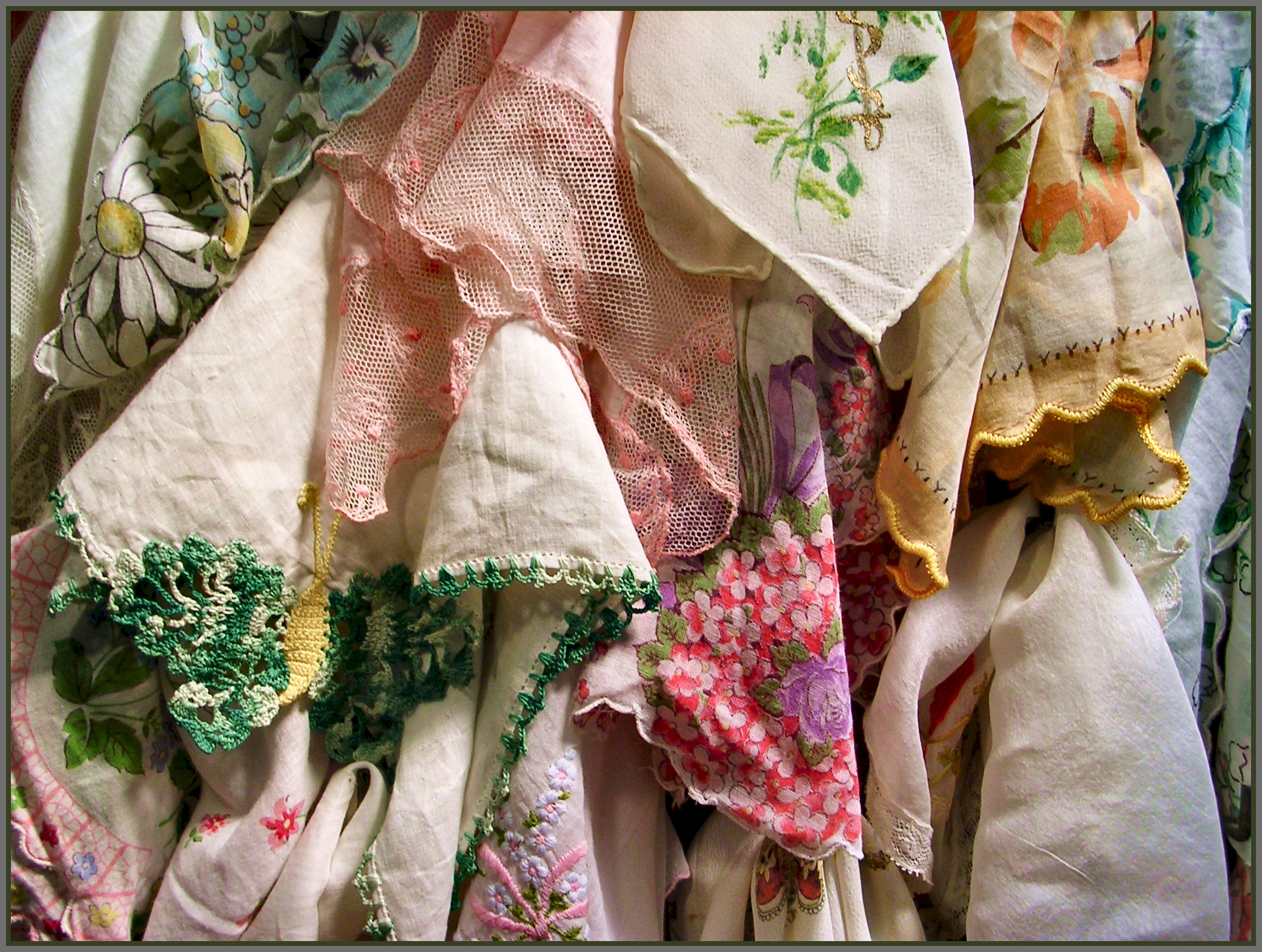
However, my interest in old things tends toward books, lots and lots of books, and sometimes china and textiles. Old handkerchiefs and tablecloths are fun to collect and cheap, too.

Objects to me are a solid way to connect to the past. Using the dishes that Great-grandmother Ethel set each Thanksgiving keeps the flow of history going. Sopping up your brow with a dainty hanky embroidered by Aunt Gertrude fifty years ago keeps the continuum of history on its course. Some things change, but the basics stay the same.

Waste not, want not

Things were better made in the past. The last fifteen years have seen shoddiness in foreign manufactured goods seep onto the market. Items that are purposely made to last about two weeks with no use and then fall apart right at the crucial moment. It’s a sad testament to consumer expectations and manufacturing standards; sad also that in an uncertain economy we can’t even afford to bypass the trash and buy quality.

Rummage through a garage sale sometime and you begin to see the things that have stood the test of time. They may be dirty, but after some cleaning they are still serviceable.

My Depression era grandparents would have shuddered at the wastefulness of the present day. “Making do” was the catchphrase well into World War II. If something broke, you could fix it. Admittedly this is more difficult with the digital technology around us. One must have a degree or a lot of time on one’s hands to try to fix a broken iPod.

Old things remind us of where we’ve been. They also show us that our standards are slipping and that we need to tighten up. Learn what a well-made product is and when you can afford it, buy quality. Buy just what you need.

As one of my favorite movies quotes goes, “More isn’t always better Linus. Sometimes it’s just more.” (Sabrina)

– Amanda Stiver

Back to the Victory Garden!

Recommended: WWII era Victory Garden film

Working in my own garden has narrowed my focus for the time being to Victory Gardens. In the course of an Internet search on the subject I came across a short film from the 1940’s covering the virtues of a Victory Garden and the need for it on the home front.

Click here to view video.

It’s only about 20 minutes long, but it gives you a clear picture of what the ideal Victory Garden looked like. It puts to shame my pitiful little kitchen garden, but then again, the garden patch in the film could contain nearly my entire yard!

Make no mistake, growing a substantial garden like this was no walk in the park. It took a lot of hard work, a hugh time commitment, and it didn’t end with the harvest. Keeping vegetables for the winter wasn’t a matter of washing, chopping, filling a plastic bag and throwing them in the freezer. Canning or “putting food by” was a big job in the kitchen. Besides that, non-processed food that could be stored through the winter was packed in sand, sawdust, wood chips or newspaper to keep it dry and placed in a root cellar (the same place everybody went during a tornado).

Living off the land was a full-time job!

When you watch the video, take note of the “engines” used for plowing the soil! Not your average garden tractor – no, this was the original horsepower! It really wasn’t that long ago that human kind switched from animal power to internal combustion power. Imagine feeding your John Deere and scratching it on the nose as it whinnies softly when you put it in the barn for the night!

How Does Your Garden Grow?

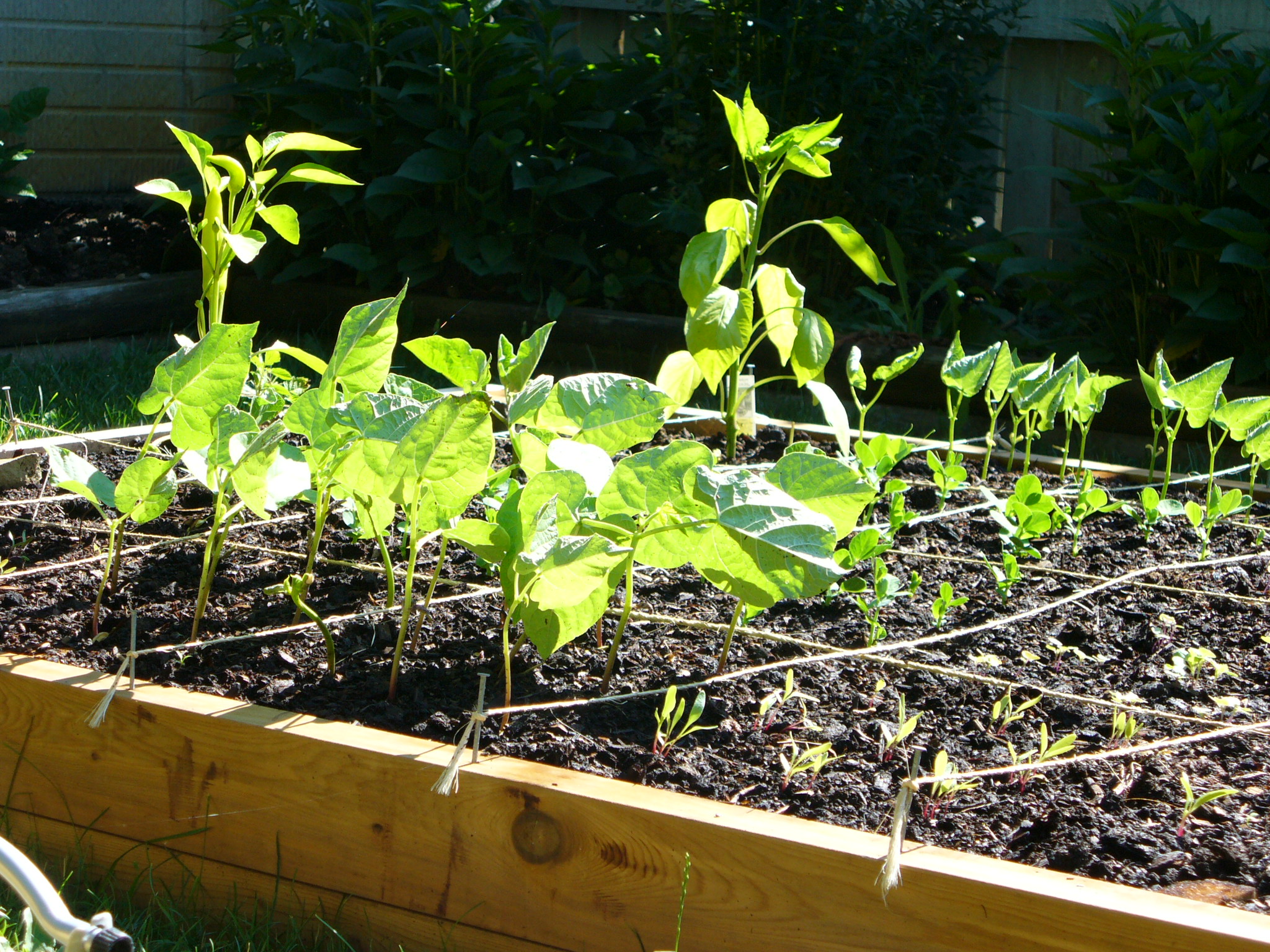
Having recently spent time getting my own small vegetable garden prepared for planting I was reminded of the work that went on across the nation as Americans got back to the land and grew Victory Gardens during World War II.

Victory Gardens were a pivotal way to make a personal sacrifice of time and effort on the WWII home front. Not that growing your own food was much of a novelty at that time. Many people still filled their produce needs by growing their own as agrarian America had done for centuries.

Veggie tales

According to the Victory Garden Manual published in 1943 and written by James H. Burdett, “War, food rationing, and the Victory Garden campaign have given millions of Americans a new appreciation of vegetables.

“… when our appetites were stimulated and our cooks trained, we were summoned as a patriotic duty to grow our own Victory Gardens so as to release commercial crops and canned goods for war demands [to feed the troops].”

The book goes on to say that, “War gave dramatic emphasis to vegetable gardening, but it is an art which is as important in peace as in war. The need for abundant supplies of garden-fresh vegetables in every home is far from ended by a peace treaty.”

“Those who enjoy the making of Victory Gardens should resolve never to abandon a practice which gives so much of exercise, recreation, and good health to all who follow it.”

Productive produce

About 20 million Victory Gardens were planted in the United States during the war. Folks in the country and those in the city turned their yards into large vegetable patches capable of feeding a whole family for most of the year if stored properly. Victory Gardeners effectively produced 9 million tons of vegetables.

For many young adults during the war the habit of growing a large, “Victory-style” garden never left them. My grandparents, for the rest of their lives, continued to grow a massive vegetable and berry garden that took up nearly half of their large yard. I have great memories of visiting the red raspberry vines and eating my fill. My first experience of harvesting potatoes was with my grandma in the garden as I helped her fish them up from the depths of the soil, like buried treasure.

Historical trends swirl around and pop up in the present every now and then and growing one’s own produce is about as good a trend as I’ve seen in a long time. Many people are growing their own because it cuts down costs and enables a more bountiful table during a crummy economy, others are influenced by the philosophies of environmental causes, and some believe that homegrown is healthier because it is generally treated with fewer chemicals.

Me, I just like reliving history and knowing that if I had to grow my own produce, I could. That said; I still have a long way to go to achieve a true Victory Garden!