The Great Depression and “Stuff”

A few months back I was blessed to be able to compile an article about survivors of the Great Depression. The article was an assignment for Vertical Thought magazine, which reaches out to a young adult and teen audience. My goal was to connect young people to the now elderly folks who lived through the Great Depression.

What was great about doing the article was that the subject fascinated me. Likewise, my interview material was everywhere! My relatives, older folks from the church congregation I attend, and from the community.

I think what has always amazed me about that era was that although so many people were barely scraping along; you will often hear them say that they didn’t know they were poor.

There was still an unspoken rule that if you had food to eat, a roof over your head, and a family with love – you were all right. Notice I didn’t say indoor plumbing, electricity, air conditioning, a new car, digital communication devices, digital music devices, etc. There are some basic things that all humans truly need. Then there are “necessities” that we are conditioned to “need.”

Binary Burden

To be fair, I, like the next person, use my fair share of these devices and benefit as a result, but I also find myself over-processed from them. In the same way that junk food is over-processed to the point that it doesn’t resemble its original components; I think over-digitalization is similar.

We lose ourselves in the crush of information, our ability to concentrate is tampered with, and we begin to feel like we can’t live without all the social networking, constant texting, and electronic gadgets. We’re addicted to a pile of things or worse, to the miles of information encoded in the vapor that is the web!

Tough as it is to imagine, we could all probably get along without the proliferation of leisure and time saving devices that drive store and Internet sales these days.

Maybe I’m a young curmudgeon in the making, but there is something to be said for daily physical activity that leaves you fatigued, but invigorated by the activity and accomplishment.

Walk the talk

My challenge to you – go find one of these elders and ask them about (if possible) their life before electricity. Ask them to tell you what it was like when each new device came into popular use. Ask them how they got along without all those things.

You will be intrigued by the answers, and more than that, you will have made a connection to their past, which is now part of yours. You will be an historian!

Daily Life – Living in the Past

I just came across a magazine called Early American Life. It is a niche magazine dealing with Colonial life in America, both east and southwest. It has plenty of historical detail for re-enactors or history buffs like myself.

It is refreshing to see a magazine with quality reporting and well-crafted articles that are directed at a specific field of interest. General interest magazines are sadly, a dime a dozen, particularly as they move to the Internet. This needn’t be so, but it is the nature of a void like the Internet that demands to be filled with endless amounts of copy.

Most importantly I was excited to find a magazine that exemplifies an area of history study that has always fascinated me. The word quotidian expresses it best, those little things that add up to make what we know as everyday life. To simplify, I call it the history of daily life.

Time Travel

This was my favorite boredom fix as a kid. I would take whatever circumstance I was in and try to imagine it in a different era of history, a little time travel.

Say I was on a long drive home with my parents, no scenery to speak of, 12 years old, getting carsick, what to do? What if it wasn’t the present, but two hundred years earlier in colonial era America?

What would I wear? Well, not jeans and a t-shirt, but what was the equivalent for a middle class miss? What would I be riding in? A mini-van? No. Well then, maybe a carriage, but what kind? How many horses, or would I be on horseback?

Where would I be traveling? What kind of house would I live in? What would I eat? What amenities would exist? Electricity? Certainly not. Plumbing? Not really – just a chamber pot (imagine that the next time you stumble to the bathroom early in the morning!). What would I do all day? Sewing? School? Music? The list can go on and on.

Try a little time travel yourself – where would you go? How would you have been living?

Back to the Victory Garden!

Recommended: WWII era Victory Garden film

Working in my own garden has narrowed my focus for the time being to Victory Gardens. In the course of an Internet search on the subject I came across a short film from the 1940’s covering the virtues of a Victory Garden and the need for it on the home front.

Click here to view video.

It’s only about 20 minutes long, but it gives you a clear picture of what the ideal Victory Garden looked like. It puts to shame my pitiful little kitchen garden, but then again, the garden patch in the film could contain nearly my entire yard!

Make no mistake, growing a substantial garden like this was no walk in the park. It took a lot of hard work, a hugh time commitment, and it didn’t end with the harvest. Keeping vegetables for the winter wasn’t a matter of washing, chopping, filling a plastic bag and throwing them in the freezer. Canning or “putting food by” was a big job in the kitchen. Besides that, non-processed food that could be stored through the winter was packed in sand, sawdust, wood chips or newspaper to keep it dry and placed in a root cellar (the same place everybody went during a tornado).

Living off the land was a full-time job!

When you watch the video, take note of the “engines” used for plowing the soil! Not your average garden tractor – no, this was the original horsepower! It really wasn’t that long ago that human kind switched from animal power to internal combustion power. Imagine feeding your John Deere and scratching it on the nose as it whinnies softly when you put it in the barn for the night!

How Does Your Garden Grow?

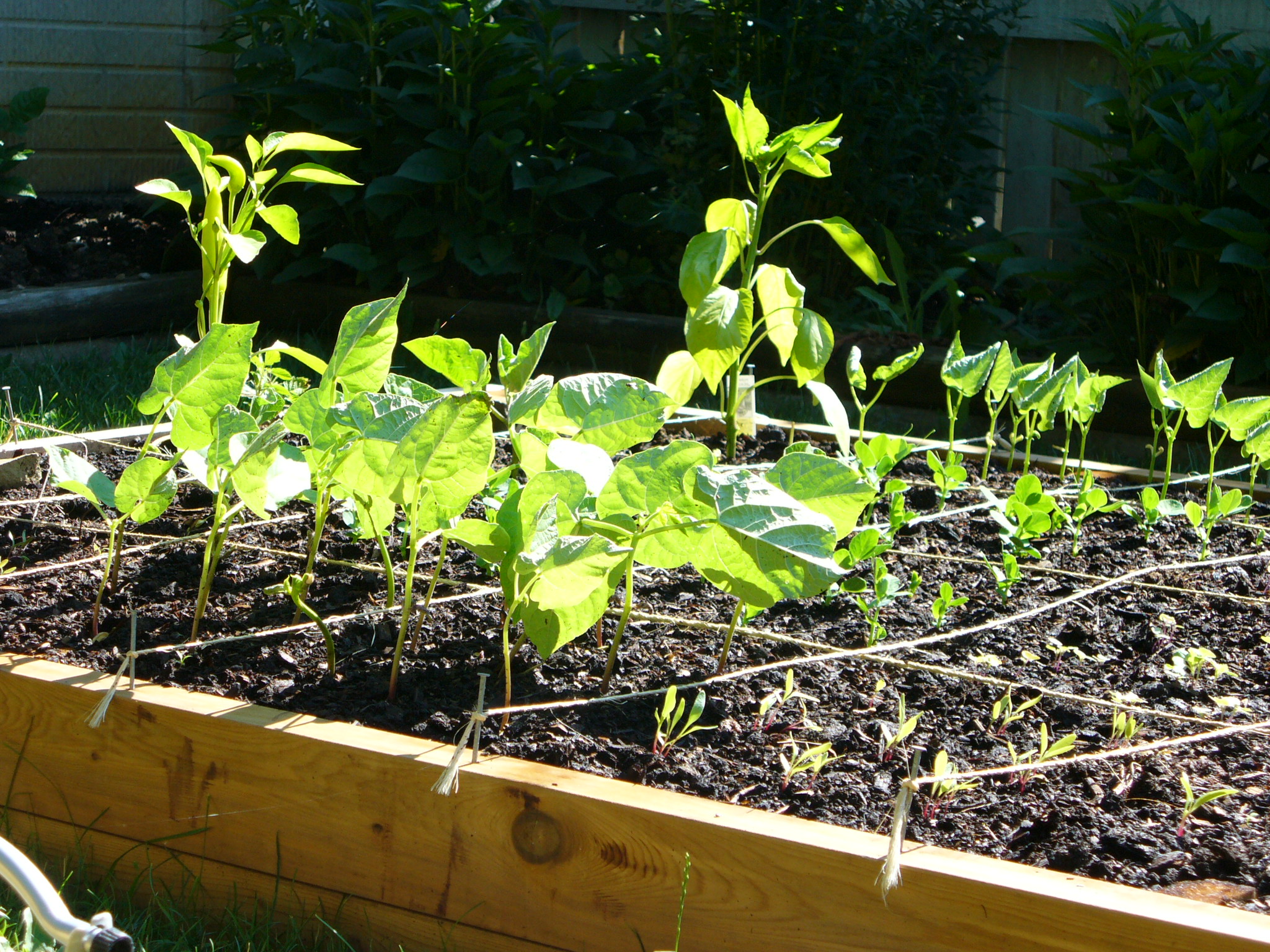
Having recently spent time getting my own small vegetable garden prepared for planting I was reminded of the work that went on across the nation as Americans got back to the land and grew Victory Gardens during World War II.

Victory Gardens were a pivotal way to make a personal sacrifice of time and effort on the WWII home front. Not that growing your own food was much of a novelty at that time. Many people still filled their produce needs by growing their own as agrarian America had done for centuries.

Veggie tales

According to the Victory Garden Manual published in 1943 and written by James H. Burdett, “War, food rationing, and the Victory Garden campaign have given millions of Americans a new appreciation of vegetables.

“… when our appetites were stimulated and our cooks trained, we were summoned as a patriotic duty to grow our own Victory Gardens so as to release commercial crops and canned goods for war demands [to feed the troops].”

The book goes on to say that, “War gave dramatic emphasis to vegetable gardening, but it is an art which is as important in peace as in war. The need for abundant supplies of garden-fresh vegetables in every home is far from ended by a peace treaty.”

“Those who enjoy the making of Victory Gardens should resolve never to abandon a practice which gives so much of exercise, recreation, and good health to all who follow it.”

Productive produce

About 20 million Victory Gardens were planted in the United States during the war. Folks in the country and those in the city turned their yards into large vegetable patches capable of feeding a whole family for most of the year if stored properly. Victory Gardeners effectively produced 9 million tons of vegetables.

For many young adults during the war the habit of growing a large, “Victory-style” garden never left them. My grandparents, for the rest of their lives, continued to grow a massive vegetable and berry garden that took up nearly half of their large yard. I have great memories of visiting the red raspberry vines and eating my fill. My first experience of harvesting potatoes was with my grandma in the garden as I helped her fish them up from the depths of the soil, like buried treasure.

Historical trends swirl around and pop up in the present every now and then and growing one’s own produce is about as good a trend as I’ve seen in a long time. Many people are growing their own because it cuts down costs and enables a more bountiful table during a crummy economy, others are influenced by the philosophies of environmental causes, and some believe that homegrown is healthier because it is generally treated with fewer chemicals.

Me, I just like reliving history and knowing that if I had to grow my own produce, I could. That said; I still have a long way to go to achieve a true Victory Garden!

Reminiscing

I’ve written about using documentaries, historical journals, museums, and re-enactments to explore history, but I can’t go on without praising one of my favorite publications. It is a magazine that brings primary source history to my fingertips and reminds me of the struggles and challenges my parents and grandparents faced.

Don’t jump to conclusions! I’m not talking about WWII history magazines, archeological reviews, etc. I like those too, but they’re for another day.

I’m talking about entry-level history where even the most disinterested beginner can take a bit out of time and enjoy it.  A visual layout with great, short, first person reports on the historical past of the 20th century is the fundamental strength of Reminisce magazine published by Reiman Media Group which is a subsidiary of The Reader’s Digest Association, INC.

Tales of the past

This is the kind of history that you might hear your grandparents or great-grandparents tell if you are lucky enough to have these resources still alive. It isn’t ground breaking, never-before-seen historical research, but it is just as important. Knowing the daily details of the past and the experiences of our elders help us to live a fuller life, to respect them more, emulate the great things they did, and, one hopes, not make the same mistakes.

Magazines like this are a great teaching tool for kids and teens and a way to get them interested in history. Reminisce in particular has a surfeit of photographs, illustrations, and reprints of old cartoons and advertisements. Every issue is colorful, like having your own personal museum to page through whenever you need to fill a few minutes.

Did people really act like that?

After flipping through the past, it might surprise you to realize how degraded our current society has become. Wholesomeness is not something marketers feature much anymore. We are so used to the world in which we live that sometimes it takes a virtual journey back in time to realize how sordid it has become.

Scanning the advertisements of years past is an education in what people valued. The advertising professionals of the era designed their material to appeal to those values: wholesomeness, dignity, respect, faith, hard work, thrift, good clean fun, cleanliness, good cheer, family, marriage, the innocence of romance. From our 21st century cynical viewpoint we often see this material and think it looks hokey or syrupy. Kind of sad that good clean fun isn’t considered fun anymore.

There is one requirement when delving into this kind of historical record (or any part of the past, actually): check your modern sensibilities and put them aside, don’t reason from our contemporary perspective. Trade cynicism for a lighter approach to life in order to appreciate an era, only a few decades old, which had a greater sweetness and innocence than what we suffer through today.

Read Me A Little History…

Read aloud. Or better yet, listen to someone else read aloud. Really, try it!

Sound a little too dramatic? Seems kind of weird, maybe, because we don’t do that kind of think anymore. Or do we?

Have you ever watched a news anchor talk at you? They aren’t gabbing from memory – they’re reading aloud! Yep, from that teleprompter screen right next to the camera!

Guess who else reads aloud? Right – politicians. Teleprompters being the modern default, but some still use good old note cards.

Whatever the case, they are all reading aloud. We do a lot of reading these days, the Internet has made that a necessity, and so we don’t often take the time to read out loud from a book. However, back before moving pictures, radio, television, and Internet folks regularly read to each other.

Tell me a story, read me a book

On a cold winter evening around the fireplace of a rough log cabin, by the light of homemade candles, settlers would read out loud from the Bible, maybe Plutarch’s Lives (thank you Seven Brides for Seven Brothers), or perhaps a collection of Shakespeare. They didn’t have many books, but what they had, they read.

It was entertainment and education. Poetry was read aloud (sometimes from memory) as were plays, works of fiction, works of history, and religious works. It was a shared experience.

If you read aloud often enough, you begin to understand written works in a different way. Try reading the Bible silently – zoom through a few verses in the historical books of Chronicles or Kings – kind of dull, you say?

Okay, change tack, read aloud as if you are narrating a Cecil B. DeMille production of epic biblical proportions! Make sure that your audience, real or imagined, can understand each word and that the transitions from action to description are clear. Suddenly it isn’t so dull! Try the same thing with Jane Austen – you’ll be amazed at how her works come to life!

Reading aloud is an art form and a connection to the historic past. Back in the days of limited literacy those who could read aloud did so that others would have a chance to hear whatever it was they were reading. It was the default mode of literacy for many centuries until fairly recently.

Try it and you’ll find that a simple activity like this is a fun trip to the historical past.

Learning from the Past: School Books

“Here, Kitty; see what I have. Oh yes; she sees me now. I have an apple for you, Kit. One for you, and one for me. Kitty is my horse. She will eat grass and apples.”

So goes a reading lesson from page 15 of Classics for Children: A First Reader by J.H. Stickney published by Ginn & Company, Boston, USA, 1893.

I doubt you would find similar subject matter in an early grade English book today. I also doubt many kids know much about horses anymore. Back then, nearly everybody had a horse for transportation and farm work.

I find it interesting that the assumed common knowledge of 1893 differs so much from what we find common today. Digital technology has replaced mechanical technology in most realms of our life, at least on the surface.

If you scratch down deep enough you’ll find that we still rely on mechanical technology the bulk of the time. Until someone invents the replicator of Star Trek fame, we’re going to be planting seeds in the ground and harvesting them for a long time to come. Mechanical muscle gets the heavy work done.

I before E-mail

Flipping through an antique English primer is a fascinating journey into the past. The rest of Stickney’s reader is filled with references to farm animals, the agricultural world, the natural world, physical chores, and old-fashioned games like rolling a hoop.

I can still remember this world from family stories because my maternal grandparents lived it until they died and my parents grew up in it, but I wonder whether youngsters in their twenties and under will understand these basic things if the digital world continues to grow on its current scope and scale.

An old adage of history, and life, is that you have to walk before you run. You need a solid grounding in the fundamentals before you can move on to the complexities.

Learn a little bit about the agricultural world that preceded and still sustains our digital world.

It’s important.

Time Machines…

At a garage sale I picked up a book entitled, A Lady’s Life in the Rocky Mountains by Isabella Bird, who, according to the cover blurb was “a Victorian Englishwoman” – an intrepid lady traveler of the late nineteenth century.

These journalized or epistolary (letter based) accounts of the past, primary sources, are a fun way to study history. Their first-person perspective is always a refreshing change from most analytical histories on the bookstore shelf. Such perspectives, untainted by revision or assumptions are the actual thoughts of those who lived the past, warts and all.

Good intentions

I like this genre so much that I have two other books of this type in my reading pile. Mollie: The Journal of Mollie Dorsey Sanford by the aforementioned Mollie Dorsey Sanford and Daughter of the Regiment: Memoirs of a Childhood in the Frontier Army, 1878-1898 by Mary Leefe Laurence. Neither of which I have finished. For, unlike fiction, journals have their boring days, even historical journals, which tempts me to put them down and reach for something more exciting.

This is a conundrum of historiography (the study of the study of history) – the boring stuff. What do we do with it? Read, skip it, or write about it in painful detail? There are authors who do that!

Acknowledge it. If our lives were daily filled with fast-paced action, danger, and intrigue, we’d be neurotic! The boring stuff lets us live a saner life.

Life is in the details

Maybe boring is too much of a condemnation; call it instead daily life, the details of living. Stopping for a pretty sunset, relaxing in an empty hour with a good book, washing the clothes, fixing a meal, etc. These things go on, even when the danger of wars, upheaval and panic have passed.

I suspect my curiosity will get the best of me and I’ll drift back to Mollie, Mary or Isabella and finish their works. The rich detail of the eras in which they lived adding to a greater knowledge of life in the past.

If you’re stuck for an interesting history read, try an historical journal – your very own guided trip back in time.