Learning from the Past: School Books

“Here, Kitty; see what I have. Oh yes; she sees me now. I have an apple for you, Kit. One for you, and one for me. Kitty is my horse. She will eat grass and apples.”

So goes a reading lesson from page 15 of Classics for Children: A First Reader by J.H. Stickney published by Ginn & Company, Boston, USA, 1893.

I doubt you would find similar subject matter in an early grade English book today. I also doubt many kids know much about horses anymore. Back then, nearly everybody had a horse for transportation and farm work.

I find it interesting that the assumed common knowledge of 1893 differs so much from what we find common today. Digital technology has replaced mechanical technology in most realms of our life, at least on the surface.
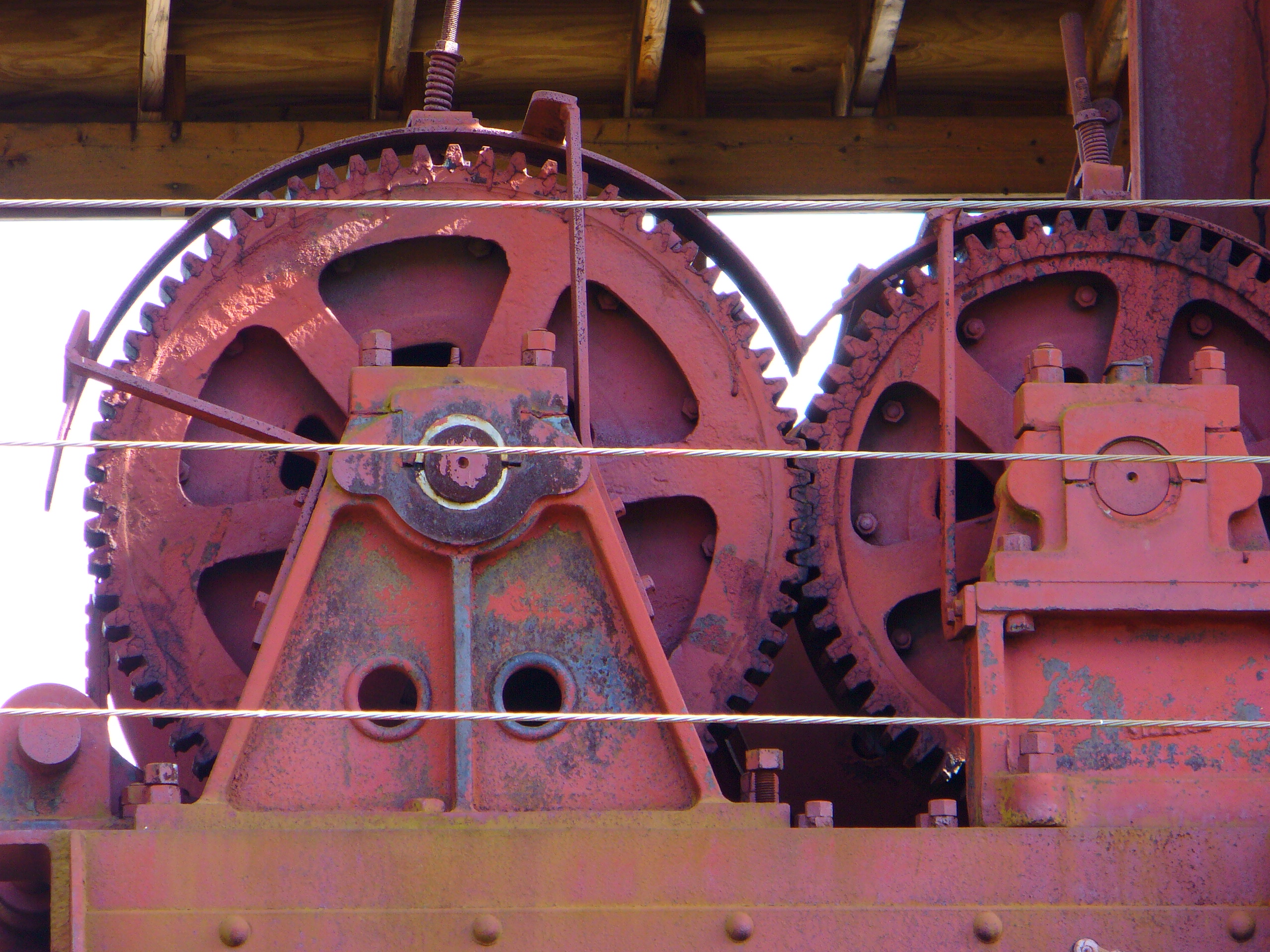
If you scratch down deep enough you’ll find that we still rely on mechanical technology the bulk of the time. Until someone invents the replicator of Star Trek fame, we’re going to be planting seeds in the ground and harvesting them for a long time to come. Mechanical muscle gets the heavy work done.

I before E-mail

Flipping through an antique English primer is a fascinating journey into the past. The rest of Stickney’s reader is filled with references to farm animals, the agricultural world, the natural world, physical chores, and old-fashioned games like rolling a hoop.

I can still remember this world from family stories because my maternal grandparents lived it until they died and my parents grew up in it, but I wonder whether youngsters in their twenties and under will understand these basic things if the digital world continues to grow on its current scope and scale.

An old adage of history, and life, is that you have to walk before you run. You need a solid grounding in the fundamentals before you can move on to the complexities.

Learn a little bit about the agricultural world that preceded and still sustains our digital world.

It’s important.

Time Machines…

At a garage sale I picked up a book entitled, A Lady’s Life in the Rocky Mountains by Isabella Bird, who, according to the cover blurb was “a Victorian Englishwoman” – an intrepid lady traveler of the late nineteenth century.

These journalized or epistolary (letter based) accounts of the past, primary sources, are a fun way to study history. Their first-person perspective is always a refreshing change from most analytical histories on the bookstore shelf. Such perspectives, untainted by revision or assumptions are the actual thoughts of those who lived the past, warts and all.

Good intentions

I like this genre so much that I have two other books of this type in my reading pile. Mollie: The Journal of Mollie Dorsey Sanford by the aforementioned Mollie Dorsey Sanford and Daughter of the Regiment: Memoirs of a Childhood in the Frontier Army, 1878-1898 by Mary Leefe Laurence. Neither of which I have finished. For, unlike fiction, journals have their boring days, even historical journals, which tempts me to put them down and reach for something more exciting.

This is a conundrum of historiography (the study of the study of history) – the boring stuff. What do we do with it? Read, skip it, or write about it in painful detail? There are authors who do that!

Acknowledge it. If our lives were daily filled with fast-paced action, danger, and intrigue, we’d be neurotic! The boring stuff lets us live a saner life.

Life is in the details

Maybe boring is too much of a condemnation; call it instead daily life, the details of living. Stopping for a pretty sunset, relaxing in an empty hour with a good book, washing the clothes, fixing a meal, etc. These things go on, even when the danger of wars, upheaval and panic have passed.

I suspect my curiosity will get the best of me and I’ll drift back to Mollie, Mary or Isabella and finish their works. The rich detail of the eras in which they lived adding to a greater knowledge of life in the past.

If you’re stuck for an interesting history read, try an historical journal – your very own guided trip back in time.

What’s in a name?

Here’s an experiment in the obvious: take a map of the world and read the names of countries in any one of the continents… Britain, Germany, France, Spain… China, Japan, Korea… Zimbabwe, Sudan, Nigeria… America, Canada, Mexico…

See how easy it is to roll right over them?

This is what I mean; we are attuned to ignore the obvious (Sherlock Holmes would be proud of this deduction). But every once in a while we turn our head, squint our eyes and suddenly a word we have read or typed hundreds of times looks like a foreign language to us.

Why is that?

I’m an English speaker, and I can cope with French, but I can’t easily read Middle English. Yet many of the words I use on a daily basis are mutants of the English linguistic past – let alone the influence of German, Spanish, Latin, Greek, Gaelic and Hebrew among the many other languages that contribute to modern English.

America, Amerigo, and Ap Meric

Yesterday I picked up a book that I had read a few years ago, The True Story of How America Got Its Name by Rodney Broome. It’s an interesting volume and as I skimmed it, I got to thinking about the many variations of the origin of “America,” as an appellation for the continent.

Nearly everyone has heard of Amerigo Vespucci, and how a friendly mapmaker gifted his first name to the continent. Well, maybe – but why use a first name, usually reserved for royals, when surnames were the norm for everyone else?

So Broome supposes that maybe it wasn’t Vespucci’s first name, but someone else’s last name on the map. Interestingly, Vespucci was on board a Spanish ship with an aggressive captain who readily attacked English vessels. At the same time an English vessel disappeared, carrying the famous explorer John Cabot in whose possession was a map illustrating the American continent and inscribed with the name of Richard Amerike (or Ap Meric, as it is in Welsh).

Call in NCIS, this has the makings of a mystery! Did the map change hands? Was Amerike’s surname on the map first? Could be.

America, by any other name…

If you search far enough there are a number of other origins for the name “America” that pop up.

Some claim that the Scandinavian Norsemen who came exploring the American continent in pre-Colombian times brought with them a phrase for this new western land, “Ommerike” that sounds roughly like America.

Other possibilities suggest the Mayans had a similar sounding phrase for their lands.

So what’s the truth?

Names that sound similar and move from one language to another can become mixed and “owned” by both cultures. Imagine the interesting spelling variations you can get from an answering machine if the caller’s voice isn’t clear!

In my opinion there is validity to the connection to Richard Ap Meric. As Broome contends, maps were precious at that time in history, particularly in areas previously unexplored by Europeans. If Mr. Vespucci got a hold of it, why wouldn’t he want to cash in on a similar sounding name? After all, exploring the new world was all about finding gold, glory and gathering fame back home!

The possibilities have merit… or is that Meric?