WWII Rations: Baking a Pudding?

(Image: Morguefile.com)

After reading all about British rationing during World War II I decided to try one of the recipes. This is a side effect of studying culinary history – edible research material!

I thought about trying my hand at green veggies or potato mash, but I deferred to a dessert recipe. I chose ‘Spiced Cottage Pudding with Lemon Sauce’ from Victory Cookbook: Nostalgic  Food and Facts From 1940-1954 by Marguerite Patten OBE.

I only got as far as the ‘Spiced Pudding’ and discovered that ‘pudding’ is one of those English words that has multiple meanings. My impression of pudding is a gooey, chocolaty, semi-liquid that one makes in a pot on the stovetop, but this recipe is more of a bread in the style of ginger-bread. A cake really.

Here is the recipe with my additions and tweaks:

Spiced Cottage Pudding (or in the States – Spice Cake)

-8 oz (1 cup) flour (I used whole wheat) with 4 teaspoons baking powder

-Pinch of salt

-2 tablespoons dried egg (or two fresh eggs)

-3 oz fat (light olive oil)

-3 oz sugar (a measurement also known as a ‘snit!’)

-1 teaspoon ground cinnamon

-1/2 teaspoon grated nutmeg

-1/2 teaspoon mixed spice

-Approximately 1/4 pint (half a cup, or a little less) milk

(I used reconstituted dried milk to get in the spirit of WWII rations, and although being smelly, it incorporated effectively.)

Instructions: Mix the flour and baking powder with the salt and dried egg. Mix the fat in well. Add the sugar with the spices; mix to a stiff consistency with the milk (you may not end up using all the milk). Turn into a greased pan about 8×6 inches (the cake will rise moderately, like gingerbread). Bake in the center of a moderately hot (350° F) oven for 30 minutes. Cut in squares and serve hot.

> The result was a nice firm, if slightly dry cake with a lovely spicy flavor. This tasty cake, along with a dollop of whipped cream, would go well with coffee or tea.

Interestingly, the amount of sugar in this cake is far less than what we normally see in recipes. So much so, that you might mistake it for a snack cake rather than a full-blown dessert. However, remembering back to the 8 oz a week ration of sugar per person, you can see why recipes of that time were spare with the sugar. Sugar was as rare as diamonds!

There you have it – a recipe for history!

– Amanda Stiver

WWII: Fed Up on Feeble Rations

Limited food rations in Britain during World War II meant a lot of creativity in the kitchen. If you didn’t have eggs, which are essential in baking, you had to learn to use dehydrated powdered egg in your recipes. If you didn’t have milk, you have to make do with powdered milk – called household milk then.

Fortunately flour wasn’t rationed during the war, but being wasteful just wasn’t an option, so you were careful with the amounts you did have.

By the book

(Image: Amanda Stiver)

Victory Cookbook: Nostalgic Food and Facts From 1940-1954, by Marguerite Patten, is a compilation of three separate books about the Kitchen Front in WWII Britain. Each contains menus, cooking tips, and recipes from those years as provided by the British government to help cooks be more inventive with their meager rations.

I find these kind of historic resources fascinating because they provide a trip back in time, but also because they are still immediately applicable. Most all of the recipes in Marguerite Patten’s book are doable today. They may not be to our modern day taste, a taste, however, that is often sullied by overindulgence.

Having great material resources is good, but it can lead to wastefulness. Economics being what they are means that we are in for some particularly nasty inflation in the US, so looking back at a time when people carefully eked out meals with what they had on hand is as relevant as can be!

What did they eat?

Tooling through the recipes I find great emphasis on vegetables. They were mostly home grown, thus cheap, and un-rationed, thus available. The government didn’t ration these foods because of their immense nutritional value and so they encouraged people to eat them daily, in large portions.

Expectant mothers and children were given special supplies of oranges for Vitamin-C and cod-live-oil for Vitamin-D and essential oils. However, everyone else had to scrounge for vitamins via their vegetables.

Green, leafy vegetables were encouraged daily as well as a serving of raw vegetables. Sound familiar? This same type of advice is encouraged by current nutritional experts. More so because those raw vegetables contain enzymes that are essential for proper digestion.

Spuds

(Image: Morguefile.com)

Potatoes play a prominent role in the cook book. As the government material of the time said, they could be grown in England, preferably at home, and thus needed no transportation or importation – freeing up ships to transport supplies to the military forces overseas. They provided glucose and rounded out meals of small portions of meat (which was heavily rationed) and servings of vegetables.

Even pastry for desserts came to be made partially of potato mash. There was no job too big for the humble potato to complete!

Technique

For vegetables, so highly encouraged, cooks were instructed to prepare them by steam boiling. Not with the fancy steamer contraptions we have today, but with a small amount of water in the base of the kettle, just enough to boil into steam when the lid was added and thus cook the veggies.

This technique had the effect of keeping the cooked vegetables appetizing, avoiding the heavily boiled mush that was common. Also it required less cooking time and conserved fuels such as coal that were in short supply. Stoves at that time were wood, coal or oil powered, not electric or gas fed like we have today. Infrastructure wasn’t yet that advanced.

Steam boiling also kept some of the vitamin content intact. Certain vitamins are sensitive to heat and are diluted by water, thus over-cooking leads to depleted nutrient value. Minimal cooking preserved the water-soluble vitamins. Likewise, cooks were encouraged to save the cooking water for soups and other dishes – thereby consuming the rest of the precious vitamins and minerals.

This, by the way, is a fantastic tip for our lives today. Saving vegetable water doesn’t take much time and provides better nutrition. Likewise, pasta water can be used as a soup base because it contains starch and acts as a thickener.

So, go ahead, cook a little history today and standby for more on this topic soon…

– Amanda Stiver

Eating Up World War II

(Image: Morguefile.com)

Could you live on 1 fresh egg every two weeks?

Could you live on 2 oz. of tea every week? How about 4 oz. of meat per week (that’s the size of 1 small steak, by the way), 2 oz. of butter (half a stick), 2 oz. of cheese, and 8 oz. of sugar (yep, just one cup A WEEK!).

These are merely a sample of the ration measurements for a single individual’s food for one week during World War Two in Great Britain. This, combined with the rations of other family members in a household, were the raw ingredients for breakfast and dinner. Lunch was often taken at school or a work cafeteria in order to stretch those portions.

Bread wasn’t rationed and neither were vegetables. To take advantage of fresh produce, many wartime Britons grew stupendous gardens – Victory Gardens. Likewise their American cousins dug in and planted – though rationing in the States was not nearly as severe. Vegetables made up a large part of the diet and were the main supply of vitamins and minerals.

The Ministry of Food was the government office in the UK that directed rationing and also provided creative recipes for using limited foods. Taking a turn through a cookbook from that era is a lesson in thinking outside the box. Replacements and substitutions were the order of the day.

Next up… how and what kind of meals did they create on such meager portions? Stay tuned!

(Ration facts courtesy of Victory Cookbook: Nostalgic Food and Facts From 1940-1954, Marguerite Patten OBE, Chancellor Press, 2002.)

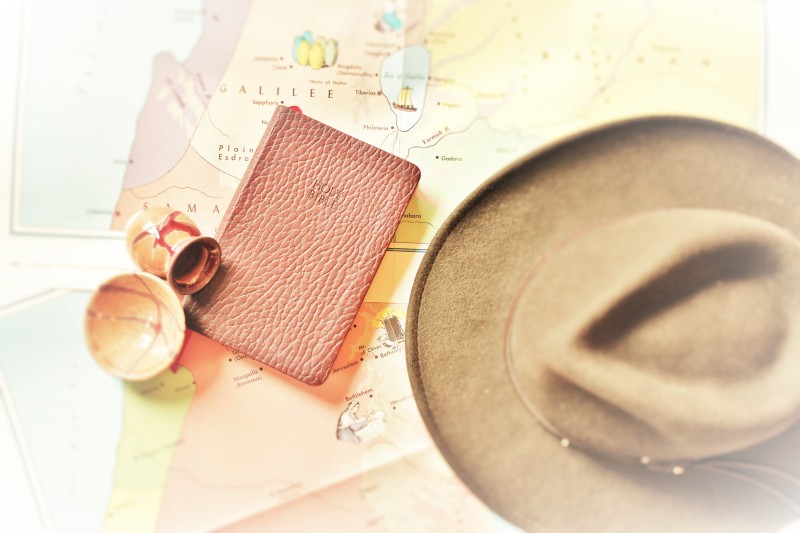
The Book: History or Religion?

Today at sunset begins Yom Kippur or the Day of Atonement for the Jews, followers of Judaism, and for a few Christians who recognize the call to convene on certain feast days found in the Old Testament scriptures – texts multiple millennia old.

(Image: Amanda Stiver)

In this increasingly digitized world where daily billions of bits of information are finding their way to the computerized version of a warehouse we tend to lose sight of our old friend the Book. Kindles, iPads, and eReaders of various brands are marching onto the print battlefield and squaring off against the age old codex. The convenience of downloading your library instead of driving to it seems ready to overwhelm the more basic, tactile experience of opening a book.

The old fashioned way…

Yet codexes, and their scrolled predecessors, are the life blood not only of history but also of religions.

Many religions have specific holy books and texts. Buddism, Islam, etc., but the one most famous to the English tongue is the Bible and its King James translation. A work that not only influenced Protestant Britain and later America, but the very fiber of the English language.

Holy or secular?

When does a book become holy, and at what point is it too holy or too religious to be considered an accurate source of history? Evolutionary anthropological theory would have us dispense with such sources as nothing more than a stage of development in which human origins are gussied up in mythical explanations.

Yet religionists demand that a text like the Bible be accepted as the very word of God. So, where do we start? Do we deny the existence or use of these resources, some thousands of years old, as off limits to the study of history? Do we take only these printed words as truth?

It’s basic really. If you want to know the plot of a mystery, do you stare at the cover and try to summarize what you think the author might have written? Or do you crack the cover and do the simple, intelligent thing and read it?

Read it, of course…

“And the LORD spoke to Moses, saying:

Also the tenth day of this seventh month shall be the Day of Atonement. It shall be a holy convocation for you; you shall afflict your souls, and offer an offering made by fire to the LORD. And you shall do no work on that same day, for it is the Day of Atonement, to make atonement for you before the LORD your God. For any person who is not afflicted in soul on that same day shall be cut off from his people. And any person who does any work on that same day, that person I will destroy from among his people. You shall do no manner of work; it shall be a statue forever throughout your generations in all your dwellings. It shall be to you a sabbath of solemn rest, and you shall afflict your souls; on the ninth day of the month at evening, from evening to evening, you shall celebrate your sabbath.” – Leviticus 23:26-32, New King James Version, The Holy Bible

If you celebrate the Day of Atonement may your observance of this historic day be filled with meaning and purpose.

Amanda Stiver

Book Me: Keeping History Real

This scowl could only be saying, “Interpret history for yourself!” (Image: Morguefile.com)

Some days history comes alive and some days it stays comatose. Why is that? Why does one subject or exhibit or picture, etc, spur a curiosity in the past and another makes voluntary dental work sound like fun?

I had one of these moments at an interpretive center the other day. I can’t call it a museum because museums tend to emphasize collections of things as is, without intensive interpretation.

This location wasn’t bad, but there were a lot of ambient battle noise recordings that could have been a couple of decibels lower. That coupled with an audio playback of each written display in tight quarters resulted in a cacophony that made me want to leave rather than immerse myself in history.

On the other hand, it might have been me because I was tired out from a long couple of days of filming, so I wasn’t in a very receptive mood. However, on the road home as I read the short pamphlet about Fort Necessity in southwestern Pennsylvania I really got into the subject. Who knew that a multi-thousand dollar interpretive center would fail to inspire where a 50 plus cent sheet of folded paper with a few paragraphs would?

This is the dichotomy of history and of the use of interpretive centers, which are more and more replacing old style museums.

Is interpreting history wise? Should not each one of us have a chance to examine the facts unimpeded and come to our own conclusions?

What if the bias of the interpretive center is wrong? Are you really teaching history or are you perpetuating an opinion?

Probably both. We must interpret, and any teacher of history, no matter how much they try to avoid it, is interpreting the subject via their own personal bias to their students. That’s part of being human.

Developing a personal curiosity into history can help each of us interpret the facts on our own. If an exhibit fails to enthrall you then dig into some books on the subject. You might find the angle that eluded you and develop a whole new area of interest.

Keep history real!

Amanda Stiver

May the Sword be with You

(Image: Morguefile.com)

I just watched a fantastic documentary entitled Reclaiming the Blade. Narrated by John Rhys-Davies of Indiana Jones and the Raiders of the Lost Ark fame, it is an excellent journey into the history of western martial arts.

The film covers the choreography of sword fights on stage and screen, sport fencing and sporting events among the Society for Creative Anachronism, comparisons with eastern martial arts, and finally the resurgence, study and practice of western, particularly Renaissance, martial arts based on written materials from that era.

It isn’t a how-to on sword basics, but if you watch closely you will pick up on a great deal of the varied techniques. On the whole it gives the interested viewer a very cool documentary that also happens to explain the history of a weapon that is infrequently used outside of action-filled adventure movies or Shakespearean plays.

Sitting on a powder keg

Swords were high technology in their day, but the western tradition of sword fighting and dueling shriveled into the tameness of modern day sport fencing with the introduction of gunpowder and gun culture. If you have ever been to a gun show at your local fairgrounds you will see the domination of explosive powder based weapons compared to blades. Sure there are always a few stands that feature knives of various kinds, but knife and sword shows tend to be subordinated to the world of rifle and revolver.

One point made very well in the film was that what you generally see in action-adventure films with any amount of swashbuckling is a strange mixture of fencing and kung fu or something similar. Not true to the western tradition in which many of these films are set. However, movies like Gladiator, Troy, Rob Roy, and a few others have been produced with a bent to historically accurate fighting sequences.

Unexpected swords

On a biblical note, if you have ever read the “armor of God” section of the last part of the book of Ephesians and wondered what a soldier did with all those weapons, this documentary will help fill in your understanding of what it took to successfully wield a sword. “The sword of the Spirit, which is the word of God (NKJV),” will take on a whole new meaning: the seriousness with which a scholar of the Bible needs to approach and handle the words of that historic book.

As interviewee John Howe, a well-known illustrator, says in the film, “Now, we’ve reached a point [in time] where we’re looking all around trying to find meaning to what’s happening… [so look to history because] …There’s nothing like history. History is all of us over thousands of years.”

Take the opportunity to watch Reclaiming the Blade, a genuinely interesting documentary film that just might become your gateway to history.

– Amanda Stiver

Watching Storms from the Porch

(Image: Morguefile.com)

A Facebook post by a friend the other day got me in a nostalgic mood. The post was about front porches and the happy memories they hold.

I have lived in a variety of houses and some had porches, some did not. Some had decks and those have become more or less the replacement for good, old-fashioned front porches. The kind of porches that aren’t just a stoop, but have room for multiple people, a chair, a wicker sofa, etc.

Architectural history

Historical trends in architecture affect the people who live in them. We live in the era of box-like abodes with little square carpets of lawn, expansive back decks and front porches so narrow you have to skooch across single file. Maybe it’s because air conditioned summers are our norm that people no longer request a deep, shady front porch to accommodate a lemonade break and catch an occasional breeze on a hot summer day.

Maybe, on the other hand, it’s because people are less social in their neighborhoods than they used to be. Strolling the sidewalks in the evening was a hallmark of years past, but with the advent of automobile culture people are more content to park the car in the garage that has moved from behind the house to the very front of the yard thereby symbolically cutting off the expression of friendliness that a big welcoming porch used to express.

Porch adventures

Whatever the case, I remember one summer day during a big storm in the Midwest. It was the porch of family friends. A group of us kids were huddled under the stone columns of the porch to wait out the thunder and lightning. We played games and watched the clouds gather. It was exciting to hear the booms and see the flashes of light from under the protection of the porch, better than being inside where you could only hear muffled reverberations.

Big, wide porches like that were a fortress for little kids in all the games we thought of to play. Climbing over the sides of stone railings during a dangerous mission in the Alps was only a sample of the fun things you could do. Scaling a column during the course of exciting archeological discoveries was another. Even better was when a kindly adult would bring out something tasty to eat as we dragged ourselves in from the Sahara.

My history takeaway is this: If you are in the position to afford to build a new home, consider being a throwback and ask for a big, wide front porch to grace the front of your home. Who knows, you might be the one to start a building trend that has the potential to bring people together again. At the very least, it will look great to all those who pass by and enjoy it!

Reviving good things about the past can be a positive thing, as long as we recognize that the past can never be wholly re-created, only, maybe, improved upon.

– Amanda Stiver

Fun at Fort Ancient

In southern Ohio, just north of the city of Cincinnati is a fort that is technically not a fort, but that might have been a fortified settlement, but we don’t know for sure.

The pink shape on the left shows the outline of the Fort Ancient earthworks.

Welcome to the world of mound culture history. There is so much that is unknown about the culture of the builders of these earthen mounds that even authorities on the subject have to qualify almost everything they say. We do know that these mounded earthen structures were carefully constructed by carrying soil in woven buckets to each site. And the sites themselves are scattered from Wisconsin to Louisiana, but particularly in Ohio

The earthen mounds of Fort Ancient, which is located near Oregonia, Ohio, were built between 1 and 200 A.D. according to the handy posters located on the grounds of the state park. They were built and inhabited by the Adena culture until about 500-600 A.D. (if memory serves). At this point their culture seems to have faded away.

More is known about the Native American cultures that also revere the earthworks, but their exact relationship to the original builders is still clouded. A Native American village in the area dates from 1,000-1,200 A.D. and American Indian settlements in the area continued from then on until the well past the arrival of European explorers.

Field trip

Touring the grounds of Fort Ancient was instructive and illustrated to me the immense size of the earthworks complex. The mounded earthen hills themselves range in height from about 6-7 feet tall to 20+ feet or more.

What the area was used for is another one of those unsolved mysteries. Archeological digs are in progress to help understand more about the area and its purpose. It could have been important for a number of reasons. The digs hope to prove that as a spiritual center there is evidence of an astronomical connection to the location. It might have been a setting for social or religious rituals. Perhaps a burial site or even a settlement, or maybe all of these combined.

Other similar earthworks in the region appear to have served a variety of purposes, so it will depend on future research and archeology of the locations to confirm their actual uses. The Adena culture didn’t have a written language, unless evidence of such simply has not yet been found.

If you have a chance and are anywhere near Ohio come check out Fort Ancient. There is a museum on site and other educational activities. The grounds are accessible by automobile and there is also a walking trail, which gives you a closer look at the location.

For more information visit www.fortancient.org

Happy history travels!

– Amanda Stiver

English is Two Languages

You can learn a lot about a person from the way they speak. You can learn a lot about a country by the language they use. In this case, by the language that is shared by two countries.

The English language is named for its country of origin, but it is shared with in use by England’s rebellious former colonies, The United States of America. That said, we really don’t speak the same language. Particularly our idioms and slang. We may spell a word the same, but that doesn’t mean we grant it the same meaning.

Perusing my copy of British English A to Zed by Norman W. Schur and Eugene Ehrlich proves elucidating.

I have heard of kerfuffles before, but didn’t realize it was a British word for a fuss, commotion or dither. Fascinating, although I rarely hear Americans use the words commotion or dither, perhaps fuss.

Girl Scouts are Girl Guides in Britain and oddly enough if you get in a kerfuffle in your troop you might get up someone’s nose! Or in America, get in someone’s hair 0r on their nerves.

A publican sounds vaguely Roman, but it really just means saloon keeper. A puncture isn’t a medical state; it is a flat tire on your car after you’ve been motoring on rough ground.

A spate is a flood of something or other. And a shout isn’t something you do after you’ve had too much alcohol, but is instead the word used for treating others to a round of drinks.

So here’s to speaking a foreign language that you already know!

Cheers!

– Amanda Stiver

Roamin’ with the Romans

I recently acquired a thin volume called The Romans and their Empire, book two of the “Cambridge Introduction to the History of Mankind” edited by Trevor Cairns.

I have lamented my lack of detailed knowledge of the Classical world and I started to remedy that by reading a volume on the Athenian Navy. Rome was also in my sights, not unlike the Visigoths of old, and now, thanks to this little jewel of a book, I’ve begun to put Roman history in its place.

Little book, big info

What I like about this volume is its short length and the breezy way history is presented. I’m guessing the target audience is a 13-15 year old or an adult history novice. It doesn’t mire itself in boring analysis, but it does demand at least a working knowledge of past events. Expectation is a good thing, it makes us strive to achieve more, in this case filling our minds with the outline of human history.

The book is illustrated with photographs of ruins, reconstructed models of Roman life, maps, and some great little cartoonish illustrations of various events in Rome’s history. It goes by quickly, but is a rather nice outline of the Roman past from Republic to Dictators.

Wherever you Rome…

What I’ve learned so far is that Rome was founded back in the 700’s B.C. and developed its form of representative government around 510 B.C. Gradually it conquered and collected the various tribes around the Italian peninsula into a relatively cohesive smallish empire.

Apparently the Romans treated their subjugated peoples better than the Greeks had done. If you lost to Greece they could, on a bad day, kill your entire population, or maybe just the adult males, and on a good day simply sell you into slavery. The Romans were nicer, they didn’t kill you as they knew the value of positive relations and the wealth that functioning subjugated peoples could bring them.

The Romans even tolerated a certain amount of religious freedom, as long as you weren’t a troublesome Christian, Jew or a Celtic Druid. But alas, their republic couldn’t last forever, as it seems, can any modern republic of which we see evidence each day in the United States. As the empire expanded the power of the people shrank.

Et tu Rome?

In 46 B.C. Julius Caesar became Emperor of Rome, principal citizen, and dictator. The republic survived in form if not in deed. The senate could not thwart the will of the Emperor (more pity that) and for a while the arrangement worked as long as there was a series of good Emperors, but then they wound up with a whole slew of rotters and things got bad.

That’s the jist of the story. Good book, good resource, unfortunately out of print, but Amazon.com, BarnesandNoble.com or other booksellers probably have a used copy or two. If you want to develop a working outline of ancient Roman history without bogging down in excess information, this is your gateway. You can add the details later!

– Amanda Stiver