I’m a magazine junkie. I admit it. I don’t know what it is about those glossy pages or attractive photographs that pull me in, but I’ve loved a beautifully crafted monthly publication since I was a kid. Alas, I was born too late, and the digital age has attempted to dislodge this most tactile of printed material.
If you’ve never subscribed to a magazine, then you don’t know the eager anticipation of each issue when you check your mailbox. Like expecting the Amazon van, only you didn’t have to select your item, you get to be surprised with interesting articles, beautiful images, and pertinent information about your favorite subject, etc. It’s great!
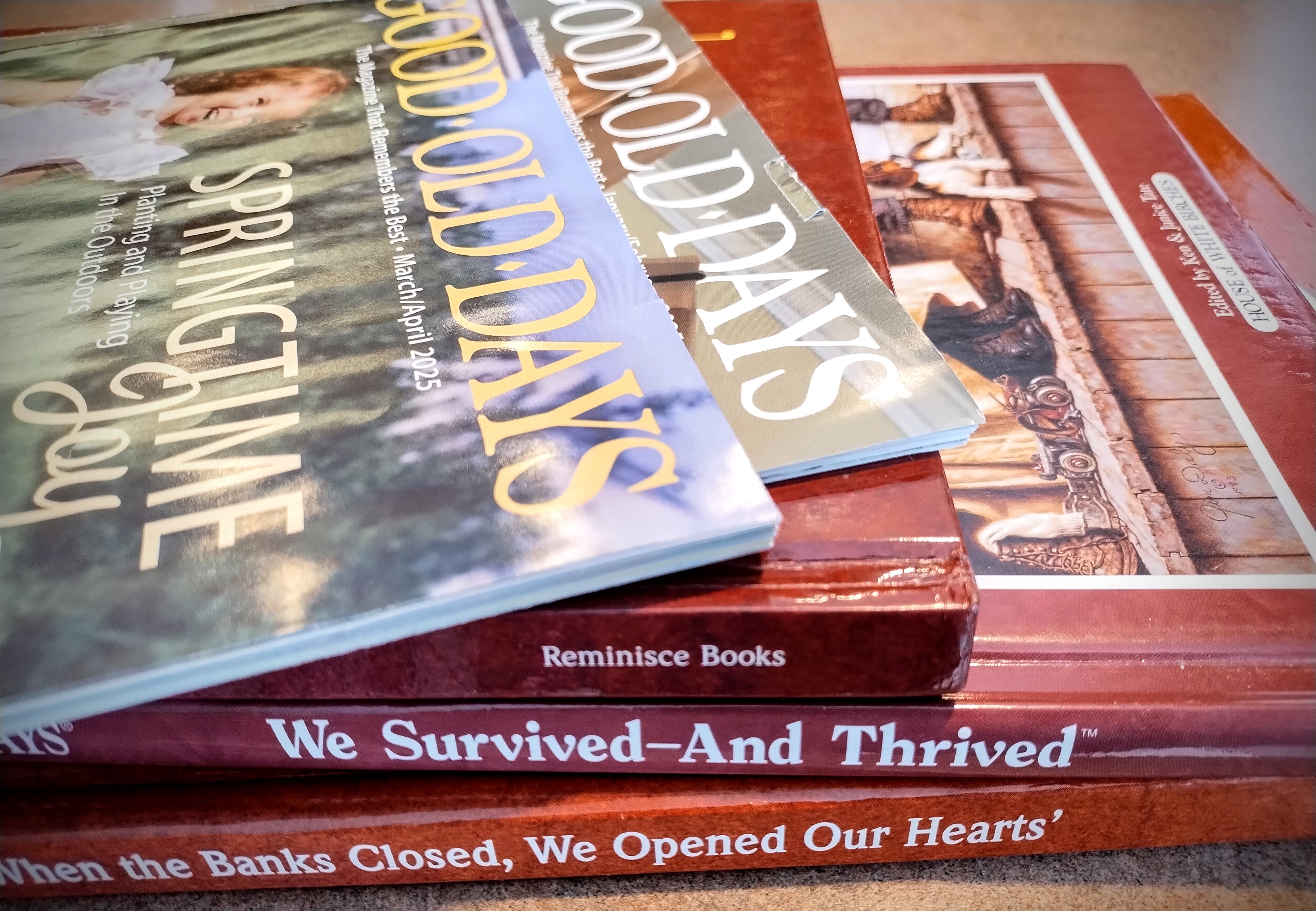
However, I issue a caveat. I’m not an indiscriminate magazine lover. I only like certain types of magazines. Historical subject matter predominates, followed by beautiful imagery, and then practical information. Victoria and Teatime are favorites, Backwoods Home and Self-Reliance are sometimes subscriptions, but Good Old Days magazine is a perennial, as was Reminisce (sadly, no longer in print).
Is nostalgia really history?
I’ve heard a few opinions through the years that nostalgia is just living in the past. And that such reminiscences aren’t really history because they look back at the past through an idealized lens. But isn’t that exactly what we should do with the past? Look back and preserve the good memories and positive lessons in order to carry them forward, all the while understanding the bad in order not to repeat it?
Nostalgia is an important part of civilization for the very fact that it idealizes certain virtues. There is a reason we have a phrase to describe an optimal version of the past called a “golden age.” There are things in those ages we want to preserve because it wrought great good. Great documents that enshrine freedoms, cultures of debate and consensus that prevent tyranny, religious revelation, acts of great self-sacrifice, and so on.
But nostalgic history serves a less lofty purpose as well. The good memories families pass on that ultimately become happy traditions; those are often rooted in nostalgia. And just as often, practical bits and pieces of wisdom are passed along through nostalgic telling of family tales. Remember the time uncle Alfred did such-and-such…he learned that you can’t paint a house and ride a goat at the same time, and so on. You know the type of story that keeps everyone in stitches but also preserves a valuable lesson.
Reminisce and Good Old Days books: early and mid-20th century “oral” histories
Back to two of my favorite nostalgia publications. Reminisce magazine was conceived and launched by Roy Reiman in 1993, one of several photo-rich publications that was produced by his company, Reiman Publications, which was later sold to the publishers of Reader’s Digest. After a couple more corporate shuffles, it has, sadly, ceased publication. But during its nearly 30 years of being in print it established a standard for quality publication based on reader contributions.
I loved it! Cue the glossy pages and beautiful photos, but I also loved the stories about times before my day. History that I was a little too oblivious to glean from my grandparents during their lifetimes. It was like having an extra grandma or grandpa in print who could fill in some gaps. Much of it dealt with the Great Depression and the World War Two eras, events which have colored our world all the way into the present day.
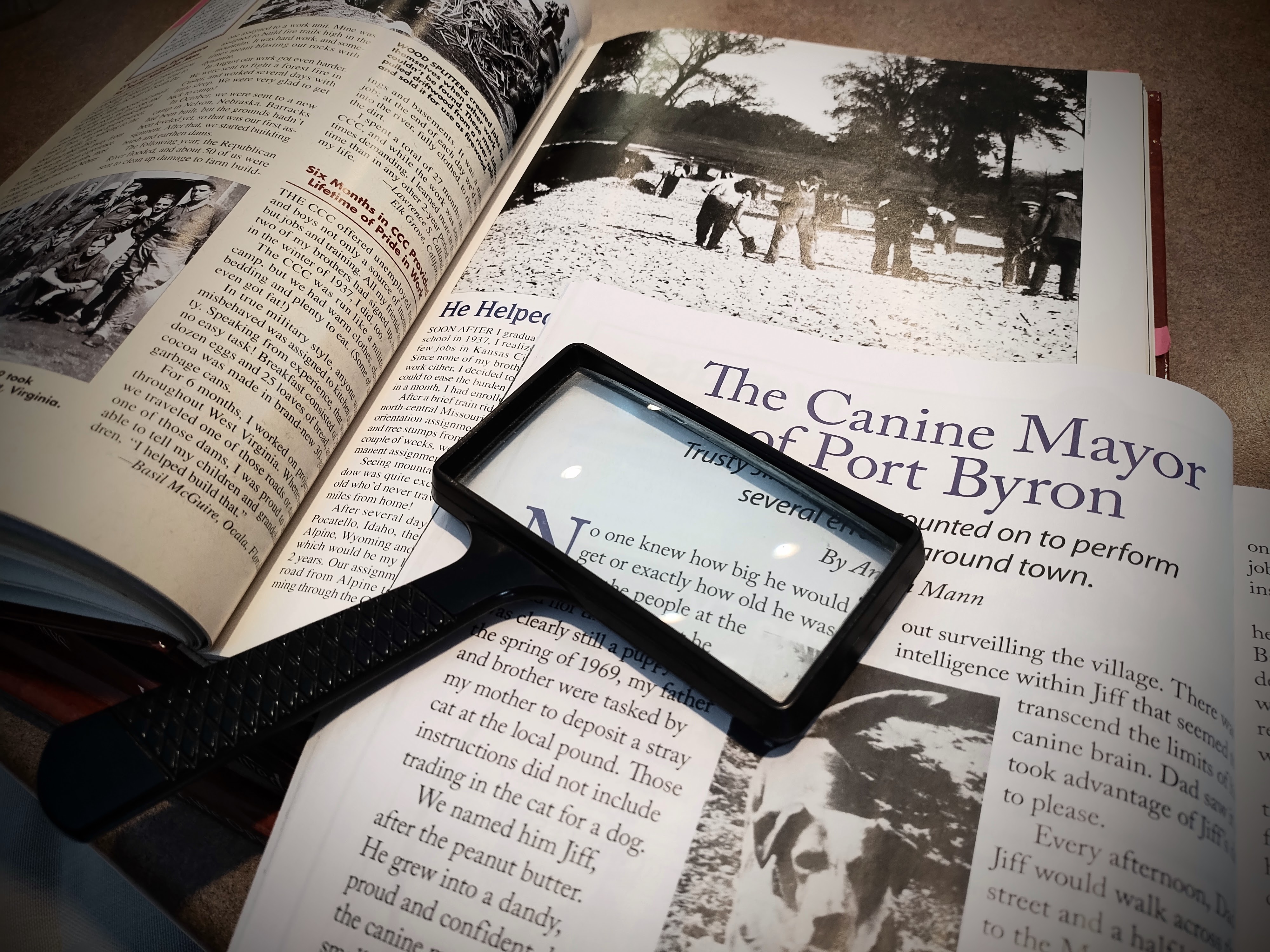
Thankfully, the editors saw fit to compile collections of some of the most pertinent stories and themes. The aforementioned Great Depression and WW2, but also kitchen memories, school days, automobile stories, family time, and women’s contributions in the 20th century, among many others. I highly recommend them as a resource, especially for teaching young ones about daily life in the first half of the 20th century.
Good Old Days magazine is another wonderful resource, happily still in print. It started well before Reminisce, back in 1964, and has continued to provide a space for older folks to process and preserve their memories of the past. That’s a big asset for us. These aren’t celebrity stories or government figures “crafting” their legacy, but rather regular people who learn a lesson here and there that they’d like to pass on to those who come after them.
The publishers of Good Old Days also produced books of submissions compiled into topical themes: cooking, school, farming, thrift, WW2, pets, religious culture, entertainment, small town social life, and so on. I consider these “oral” histories even through they are in print because they are the kid of thing you would hear if you could take the time to sit down and listen to someone over a cup of coffee as they sift through their life experiences. Oftentimes what comes out is profound, touching, sometimes a little raw, but generally a resurfacing of the good times.
Both series are available through Amazon, Ebay, AbeBooks, and the like, usually for around the five-dollar mark.
How to learn from a nostalgic history gateway
I’ve written in the past about history gateways. Avenues that pique our interest and help us to understand and envision the past, thereby learning from it, such as historical fiction, movies, documentaries, museum exhibits, old movies, old time radio, etc.
Compiled histories from nostalgia magazines are another such gateway. They are fun to read just for the sake of hearing someone else’s tales of life and are often amusing, but to really get something out of them, we need to relate it to our lives now. Here are four ways to do that:
- Have I ever experienced, in my life now, something like the story I’ve just read? What did I learn from that?
- How similar or dissimilar is my life now from the way they lived in the story I just read? For example, did they have running water? If no, how would I have adapted if I’d lived back then?
- Did they have other similar or different technologies in the past? If different, how might they be the equivalent of things we have now?
- How did the person telling the story learn from whatever it was they experienced. Did it make them stronger, sadder, happier, wiser, or more determined, etc.? How did it help those around them? What would I have learned and how would I have applied it?
- What skills did they have then that might be useful for me to learn now?
There are many more possibilities!
Sometimes stories will inspire us to make a living history experiment. Maybe we’ll cook a meal with recipes used during the Great Depression, WW1, or WW2, etc. Or perhaps try one of great grandma’s recipes. Or even build a toy like one described from long ago.
I’m directing a lot of these suggestions at young people and parents with kids (and these history compilations are great resources for home educators), but really, when it comes down to it, we all have a little youthful curiosity within us. Applying it in this way can make the study of history an active and enjoyable intellectual pursuit!
Keep thinking history!
Sources: Good Old Days: We Survived-And Thrived, Editors: Ken and Janice Tate, House of White Birches, 2003.
We Had Everything But Money, Editor: Deb Mulvey, Reminisce Books, 1992.
When the Banks Closed, We Opened Our Hearts, Editor: Mike Beno, Reminisce Books, 1999.
The above are available at Amazon, Ebay, AbeBooks, and other used-book resellers, along with many other titles from both series.
* All images are property of Amanda Stiver, unless otherwise noted. Please do not re-use without permission.
 History Gal