


In a small, local used bookstore, I came across an old paperback book with this peppy title: The Cheyenne and Black Hills Stage and Express Routes. Written by Agnes Wright Spring, a renowned historian and journalist from Wyoming and Colorado, who wrote prodigiously on topics of U.S. Western history. She was a trail blazer and the first woman to graduate with a civil engineering degree from the University of Wyoming, among many other accomplishments.
The small but lengthy volume, published in 1948 with all the attitudes and perspectives of that time, gives an impressively complete history of the establishment of the Black Hills Stage Company (1876 to 1887), and a history of the Cheyenne-Deadwood Trail. Spring drew on the accounts and diaries of those who were eyewitnesses to the events of that time.
Road agents and Shotgun Messengers
In particular, the chapters on the robbers, horse thieves, and highwaymen who plagued the stagecoach line with holdups for several years, is just as exciting as the “B” westerns of yesteryear. They really did stop the coaches, rob the passengers, and make off with treasure chests or the mail. Even more impressive were the band of “shotgun messengers” who were employed to stop them, and sometimes, to follow their trail, recover the loot, and bring them to justice.

No wonder there were so many westerns made in the first half of the 20th century. These kinds of events were well in living memory for many people, and to see them portrayed on the big screen was less about fantasizing a different era, and more about reliving a very familiar past.
Likewise, strong men of sterling character, another feature of early 20th century western movies, was an ideal also based in example. There are many names, but one whose reputation features throughout the first seven years of the eleven-year history of the Cheyenne and Black Hills Stage Line is Luke Voorhees. He was superintendent out of Cheyenne for the entire line up to the Black Hills. He traveled thousands of miles checking on stage stops, trouble shooting, and at times helping to track down miscreants.
He’s quoted as saying, “A man likes to be a creator of circumstances, not altogether a creature of circumstances.” A glance at his picture in the appendix of the book gives the impression of a piercing gaze and the strong features of a man who stuck to his principles. And that was essentially his reputation.
Reputation was a valuable commodity in that age and was defined by your honesty, moral integrity, and faithfulness in carrying out a mission with which you had been entrusted, even to the point of your own hurt. Not a bad ideal.
Stocking the trail
Another notable focus of Spring’s tale of the stagecoach business is the supply side. We probably do the same thing now, we fuel-up our vehicles and take off for our journey without really paying attention to the supply chain that brings the fuel to us, whether gas or electric current.

We notice when prices go up, or when policies dictate switching from one kind of fuel to another, gas vs. electric, etc. But usually, we get into our wheels and set forth, not dwelling on the truck that brings the fuel to the station, the men who drive them, the tankers that supply them, the refineries that make corn into ethanol or crude oil into gasoline, and so on.
The same was probably true of those traversing the stage lines in the 1870’s, too. Little did they dwell on the exacting specifications necessary for production of the Concord coaches back in New England, whose familiar rolling, swaying gait swept across prairie and mountain valley. Or the many thousands of head of horses necessary to have two or three teams of six horses ready at any given stage stop to replace the weary equines that had brought the coach in. Nor did they dwell on the many endless details of supplies needed to keep the stage stops open and welcoming to feed and house passengers. But they did notice if they had a good meal and night’s rest, and felt safe on the road.
Even the details of the treasure coaches, while probably more fascinating to the public via the lurid tales of coach robberies and outlaws that circulated in pulp magazines in the American east, and certainly interesting to the thieves themselves, were lost on the citizenry whose daily and weekly mail was anticipated and whose banknotes and gold were shipped hither and yon via the coaches. They expected the mail to get through somehow, but they probably didn’t know what the exact specifications were for the “salamander”, a portable, green iron safe, or “the Monitor”, a steel reinforced stagecoach.
For a map of the trail, this article from Ridermagazine.com gives a good approximation based on modern roads: https://ridermagazine.com/2019/12/20/stage-route-to-deadwood-tracing-a-historic-route-to-the-black-hills/
Tools of the road


From left: 1. Spearfish Canyon road, 2021. 2. Deadwood, SD, still a town where all the action is, 2021. 3. Buffalo Gap, SD, now nearly a ghost town, but an active property and stage stop during the gold rush days, 2017.
Another essential aspect of the stage business were the drivers’ tools. The proper whip, used mostly for the loudness of its crack rather than contact with horse hides, was a prized possession of each driver. His cold weather gear was essential for survival, such as buffalo skin coats, and other furs to ward off the sometimes below zero winters of eastern Wyoming and western South Dakota as the driver sat on top of the coach, exposed to the elements. A fine, warm pair of gauntleted driving gloves kept his hands from freezing.
Each detail and piece of equipment and its cost was important to the men who managed the stage line. A federal mail contract, unfulfilled, could result in serious loss of commerce, or worse, government fines. Scheduled travel has long been a story of closely guarded trails, careful meting out of supplies, and pinching of pennies where possible.
Freedom of movement
Transportation, and its other important off-shoot, freedom of movement has become an inherent right to humanity in the last hundred years, due mostly to the proliferation of the automobile. But our ability to move freely from point “A” to point “B” is a matter of complicated, interconnected planning and expense.


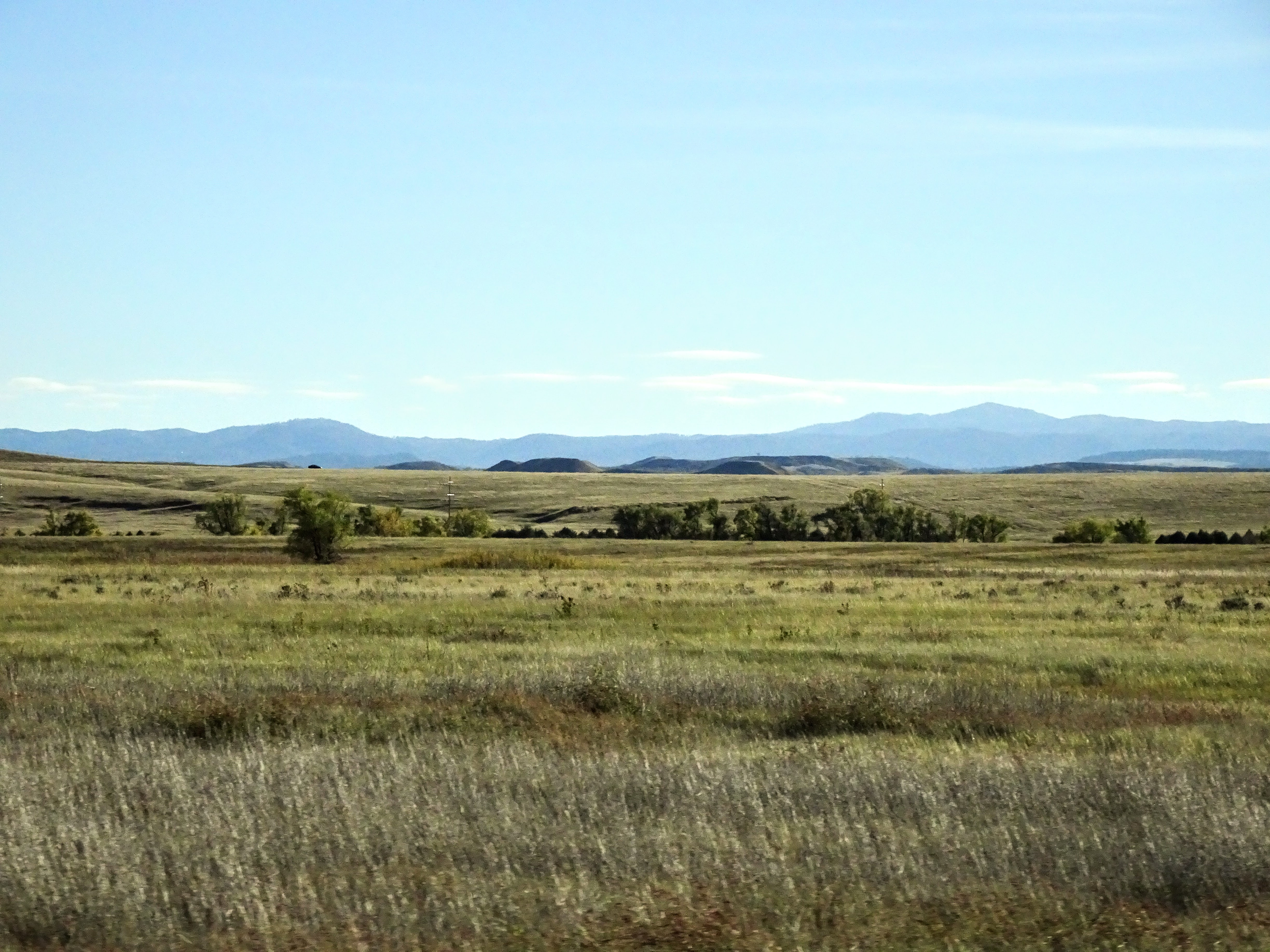
Taking a trip back in time can help us to better understand and place greater value on the blessings and opportunities we enjoy in the present. A virtual ride on an historical stagecoach line that flourished during the rapid and impactful gold rush days of the 1870’s and 80’s is one such trip, all due to the careful historical work of a dedicated journalist, writer and state historian.
Keep thinking history!
Sources: Agnes Wright Spring, The Cheyenne and Black Hills Stage and Express Routes, A Bison Book, University of Nebraska Press, 1948, second printing 1967. Available at Abebooks.com: https://tinyurl.com/2ckjvuz6
* All images are property of Amanda Stiver, unless otherwise noted. Please do not re-use without permission.
 History Gal